Matthew 19:16-30
There are Methodist churches all across our country that bear the name Asbury. Perhaps you’ve driven past the one in Downtown Salisbury next to Salisbury University; you may have even worshipped there. Some of you have heard of Asbury University or Asbury Theological Seminary. The name has become so familiar in our tradition that we rarely stop to ask a simple question:
Who was Francis Asbury?
He wasn’t a wealthy man. He wasn’t a bishop who lived in comfort or prestige. In fact, when he left England at just twenty-six years old to bring the gospel to the American colonies, he would never again see his mother or the home where he had grown up. He took the words of the Apostle Paul in 1 Corinthians 7:32-35 so seriously that he remained unmarried so he could devote himself fully to the work God had given him. He spent decades traveling on horseback over rough roads, through storms and sickness, preaching thousands of sermons to scattered congregations that often met in homes, fields, and simple meeting houses. By the time his ministry came to an end, he had ridden well over 200,000 miles and helped establish what would become Methodism across a young nation.
Whenever I read about Francis Asbury, one question keeps coming to mind. Why? Why would anyone willingly embrace that kind of life? Why leave behind family, comfort, security, and the familiar for a road that promised hardship far more often than ease? Most people would look at his life and ask, “Was it really worth it?”
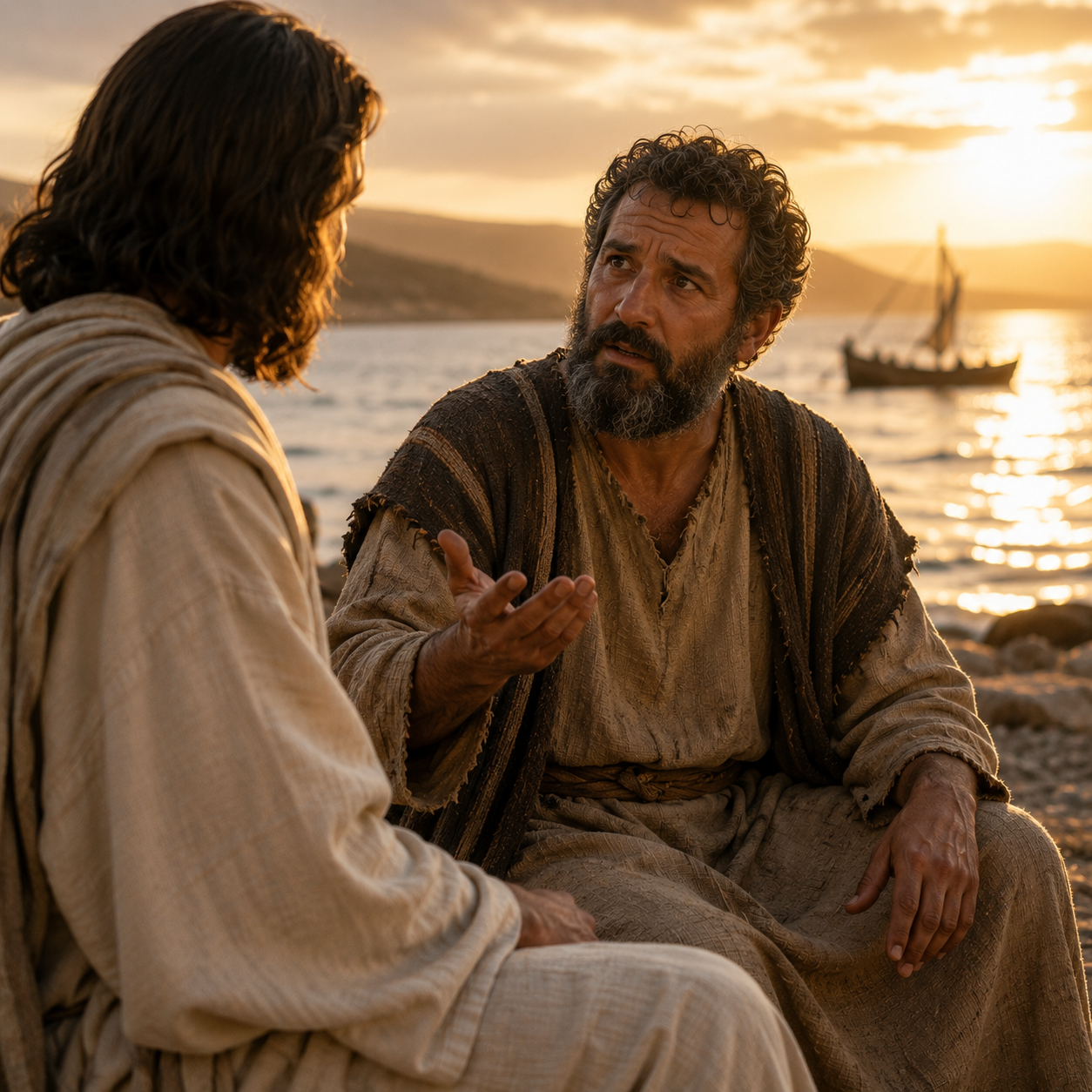
As it turns out, that isn’t a modern question at all. It is the very question we find waiting for us in Matthew 19. Peter has watched a rich young man walk away from Jesus because the cost of following Him seemed too great. Then Peter looks at his own life and realizes that he and the other disciples have already made a very different choice. They have left their boats, their businesses, their homes, and everything that once defined them. So Peter asks the question that faithful disciples have continued to ask for two thousand years:
“Lord, we have left everything and followed You. What then will we have?”
Perhaps you’ve never said those words aloud, but maybe you’ve wondered them in your own heart. Was choosing integrity over advancement worth it? Was remaining faithful through difficult seasons worth it? Was serving when no one noticed worth it? Was giving, forgiving, sacrificing, and following Jesus really worth it?
Jesus does not rebuke Peter for asking. Instead, He gives an answer that lifts Peter’s eyes beyond what he has left behind and fixes them on the kingdom that is still to come.
Looking at What We’ve Left Behind
Matthew 19:16–22
16 Then someone came to him and said, “Teacher, what good deed must I do to have eternal life?” 17 And he said to him, “Why do you ask me about what is good? There is one who is good. If you wish to enter into life, keep the commandments.” 18 He said to him, “Which ones?” And Jesus said, “You shall not murder. You shall not commit adultery. You shall not steal. You shall not bear false witness. 19 Honor your father and mother. Also, you shall love your neighbor as yourself.” 20 The young man said to him, “I have kept all these; what do I still lack?” 21 Jesus said to him, “If you wish to be perfect, go, sell your possessions, and give the money to the poor, and you will have treasure in heaven; then come, follow me.” 22 When the young man heard this word, he went away grieving, for he had many possessions.
Every question has a story behind it, and Peter’s question begins long before he ever opens his mouth. It begins with a young man who comes searching for Jesus.
Matthew tells us very little about him, yet what he does tell us is enough to stir our curiosity. He is young, he possesses great wealth, and from everything we see in this encounter he appears to be a man who genuinely desires to please God. Unlike the Pharisees who often approached Jesus with carefully crafted traps, this man arrives with no hidden agenda. He is not trying to win an argument or embarrass Jesus before the crowds. He simply carries a question that has apparently refused to leave him alone. Standing before the Teacher, he asks, “What good deed must I do to have eternal life?”
It is difficult not to admire him. He has already accomplished what many people spend their entire lives pursuing. He has wealth, influence, and the respect that accompanies a disciplined life. Yet somewhere beneath all that success there remains an awareness that something is unfinished. He has discovered what generations before and after him would also discover—that a comfortable life does not necessarily become a settled life. There are questions that prosperity cannot answer because they were never questions about prosperity to begin with.
Jesus receives him with remarkable patience. Rather than immediately correcting his assumptions, He begins the conversation where the young man already stands. They speak of the commandments, and as each commandment is mentioned the young man’s confidence seems to grow. He has not ignored God’s Law. He has shaped his life around it. When Jesus names commandments concerning murder, adultery, theft, false witness, honoring father and mother, and loving one’s neighbor, the young man answers with an honesty that seems almost disarming: “All these I have kept. What do I still lack?”
That final question lingers in the air.
It is a surprising confession from someone who appears to lack so little. Surrounded by every visible sign of blessing, he nevertheless speaks as though he has reached the end of everything he knows to do and still senses that the journey is incomplete. The commandments had given direction to his life, but they had not quieted the deeper longing that first brought him to Jesus. His words reveal a man who has become increasingly aware that the human heart cannot be satisfied merely by accumulating accomplishments, even spiritual ones.
Matthew simply records the conversation, but Mark quietly preserves a detail that allows us to glimpse the heart of Christ. Before Jesus asks anything more of this young man, Mark tells us that Jesus looked at him and loved him. It is a small observation, yet it changes the way we hear everything that follows. The invitation Jesus is about to extend is not intended to expose the man’s failure but to reveal the place where genuine freedom can finally begin. Christ is not trying to take something valuable from him; He is inviting him into something infinitely greater.
Jesus says, “If you wish to be perfect, go, sell your possessions and give to the poor, and you will have treasure in heaven. Then come, follow Me.”
The invitation is deeply personal because it reaches the one place this particular disciple has never surrendered. Throughout the Gospels Jesus does not ask every person to sell everything they own, but He does call every disciple to place nothing above following Him. For this young man, wealth had quietly become more than a possession. It had become security, identity, and confidence about tomorrow. Jesus does not merely ask him to part with his possessions; He invites him to discover whether his confidence ultimately rests in what he has built or in the One who now stands before him.
Those final words, “Follow Me,” would not have sounded unfamiliar to the disciples listening nearby. Peter had once heard those same words while casting his nets into the Sea of Galilee. Andrew had heard them. James and John had heard them while working beside their father. Matthew himself had heard them while sitting behind a tax booth surrounded by coins that suddenly seemed far less valuable than the One calling his name. Every disciple standing there could remember the moment when those words had interrupted the direction of their lives and opened a future they could never have imagined.
Now another invitation has been offered.
For a brief moment the story seems almost suspended between two possibilities. Nothing more needs to be said. Jesus has spoken, and the next step belongs entirely to the young man.
Matthew tells us, “When the young man heard this, he went away grieving, because he had many possessions.”
There is a quiet sadness in the way Matthew records his departure. The young man does not argue with Jesus, nor does he dismiss the invitation as foolish. Instead, he leaves grieving, as though he understands the beauty of what has been placed before him while discovering that he cannot loosen his grasp on everything that has shaped his life until now. He departs carrying the same wealth with which he arrived, yet he also leaves behind an invitation that will not easily be forgotten.
The road grows quiet.
The disciples have witnessed every moment of the conversation, and one cannot help but imagine them watching the young man disappear into the distance. Everything about him had suggested that he would become a disciple. He had sought Jesus before Jesus sought him. He had desired eternal life. He had taken God’s commandments seriously. If anyone appeared ready to follow Christ, surely it was this man.
Yet when the moment of decision arrived, his eyes remained fixed upon what he would leave behind rather than upon the One who was calling him forward.
It is in that silence, while the image of the departing young man is still fresh in every disciple’s mind, that Jesus begins speaking about the difficulty of entering the kingdom of heaven. Only after hearing those words does Peter finally find his own voice. His question is not born in isolation but in the shadow of everything he has just witnessed, and before long he will ask what every disciple eventually wonders in one way or another:
“Lord, we have left everything and followed You. What then will we have?”
Lifting Our Eyes
Matthew 19:23–27
23 Then Jesus said to his disciples, “Truly I tell you, it will be hard for a rich person to enter the kingdom of heaven. 24 Again I tell you, it is easier for a camel to go through the eye of a needle than for someone who is rich to enter the kingdom of God.” 25 When the disciples heard this, they were greatly astounded and said, “Then who can be saved?” 26 But Jesus looked at them and said, “For mortals it is impossible, but for God all things are possible.”
27 Then Peter said in reply, “Look, we have left everything and followed you. What then will we have?”
The silence left by the young man’s departure is broken by words the disciples never expected to hear.
“Truly I tell you, it will be hard for a rich person to enter the kingdom of heaven. Again I tell you, it is easier for a camel to go through the eye of a needle than for someone who is rich to enter the kingdom of God.”
If the disciples were surprised by the young man’s decision, they are even more surprised by Jesus’ interpretation of it. Matthew tells us that they were astonished. The word is stronger than simple curiosity or mild confusion. It describes people whose understanding of the world has suddenly been shaken. Everything they had assumed about blessing, faithfulness, and God’s favor now seems uncertain.
That reaction makes more sense when we remember the world in which they lived. Wealth was often viewed as evidence of God’s blessing. While they certainly knew that riches could be misused, it was easy to assume that someone who possessed both material abundance and an outwardly moral life had received God’s special favor. If such a person struggled to enter the kingdom, then the disciples were left wondering who possibly could.
Their question is almost involuntary.
“Who then can be saved?”
It is one of the most honest questions in the Gospels because it finally exposes what has been lurking beneath the entire conversation. The rich young man had come wondering what he still needed to do. The disciples are no longer asking what anyone can do. They are wondering whether anyone can.
Jesus answers by shifting the ground beneath their feet.
“With man this is impossible, but with God all things are possible.”
Those words do not merely answer the disciples’ question; they redefine it. The kingdom of God is never entered because someone has accumulated enough goodness, enough discipline, or enough sacrifice to deserve it. It remains, from beginning to end, the gracious work of God. The young man’s problem was not ultimately that he possessed wealth. His problem was that he trusted something he could manage more than the One who was calling him to follow. Salvation has never rested upon what human hands can accomplish. It has always rested upon what only God can do.
The disciples hear those words, but Peter is still carrying another question.
It is not difficult to understand why.
Only moments earlier they had watched someone turn away because the cost of following Jesus seemed too great. Peter cannot help but compare that moment with the day he first heard those same words beside the Sea of Galilee. He remembers the nets. He remembers the boats. He remembers walking away from the only life he had ever known. Around him stand Matthew, James, John, and Andrew, each carrying a similar story. None of them had walked away grieving. They had walked away following.
As Peter listens to Jesus, memory and hope seem to meet in the same moment. The image of the rich young man walking down the road remains vivid in his mind, but so does the memory of his own first steps behind the Master. Perhaps for the first time, he begins measuring those two journeys against one another.
One man kept everything and walked away.
We left everything and stayed.
The comparison gives birth to a question that has probably remained unspoken for some time.
“See, we have left everything and followed You. What then will we have?”
It is tempting to hear those words as though Peter were bargaining with Jesus, but the passage itself invites a more generous reading. Peter has not asked whether following Jesus is difficult. He already knows that it is. Neither has he asked whether discipleship requires sacrifice. He has lived that reality from the first day Christ called him.
His question is born from the same place many faithful disciples eventually find themselves. After years of serving, sacrificing, remaining faithful through disappointments, choosing obedience when easier paths were available, and continuing to follow Christ when the road became difficult, there comes a quiet moment when the heart wonders whether all that has been surrendered truly matters.
Peter simply says aloud what many believers have whispered in prayer.
“We have left everything…”
He stops there.
He does not yet know that he is looking in the wrong direction.
His eyes are fixed upon everything that lies behind him—the nets, the boats, the familiar shoreline, the ordinary life that once seemed secure. He is measuring discipleship by what has been surrendered.
Jesus is about to teach him to measure it by something altogether different.
Looking Toward What Christ Is Preparing
Matthew 19:28–30
28 Jesus said to them, “Truly I tell you, at the renewal of all things, when the Son of Man is seated on the throne of his glory, you who have followed me will also sit on twelve thrones, judging the twelve tribes of Israel. 29 And everyone who has left houses or brothers or sisters or father or mother or wife or children or fields for my name’s sake will receive a hundredfold and will inherit eternal life. 30 But many who are first will be last, and the last will be first.
Peter’s question is met neither with rebuke nor with silence. Jesus does not suggest that it was wrong to wonder whether the sacrifices of discipleship matter, nor does He dismiss the weight of everything Peter has left behind. Instead, He answers in a way that quietly carries the conversation far beyond the shores of Galilee, beyond abandoned fishing boats and forgotten tax booths, beyond the particular lives of the disciples themselves. Peter has asked about what has already been surrendered, while Jesus begins speaking about a day that has not yet arrived, and in doing so He gently shifts the entire conversation from memory to hope.
“Truly I tell you, at the renewal of all things, when the Son of Man is seated on the throne of His glory, you who have followed Me will also sit on twelve thrones, judging the twelve tribes of Israel.”
The phrase with which Jesus begins His answer is almost overwhelming in its scope. Peter has been looking back over the path that has brought him to this moment, remembering the ordinary life he once knew and quietly wondering what those years of following will finally amount to. Jesus, however, begins speaking about the renewal of all things, a promise that reaches beyond the circumstances immediately surrounding them and stretches to the day when God will bring His work of redemption to its glorious completion. The question Peter asks belongs to the present, but the answer Jesus gives cannot be understood apart from the future God is preparing.
It is striking that Jesus speaks of renewal rather than replacement. From the opening chapters of Genesis until this moment in Matthew’s Gospel, the story of Scripture has never been one of God abandoning His creation but of His determination to redeem it. Sin has distorted what He declared to be good, death has left its mark upon every human life, and the world itself bears the scars of humanity’s rebellion, yet Jesus speaks as One who already sees the day when all that has been broken will be restored beneath His righteous reign. Peter has been measuring the cost of following Christ against the life he left behind, while Jesus invites him to view discipleship within the much larger story of everything God intends to make new.
Only after lifting Peter’s eyes to that horizon does Jesus return to the lives of those standing before Him. The disciples who have followed Him, who have left familiar work, familiar routines, and the security of ordinary expectations, will discover that their faithfulness has not disappeared unnoticed into history. The One who called them has neither forgotten their obedience nor become indifferent to their sacrifices. Their future rests not upon the uncertainty of earthly circumstances but upon the certainty of the King who now speaks these promises.
Yet even as Jesus addresses the Twelve, the circle quietly widens.
“And everyone who has left houses or brothers or sisters or father or mother or children or lands for My name’s sake will receive a hundredfold and will inherit eternal life.”
The conversation that began with one wealthy young man and continued with Peter’s deeply personal question now opens to include every disciple who will one day hear these words. Matthew’s first readers would have recognized themselves within that promise, just as believers throughout every generation have found their own stories gathered into it. Some would indeed leave homes and families because of persecution. Others would discover that following Christ altered relationships they once assumed would always remain unchanged. Still others would surrender opportunities, ambitions, comforts, or securities that had once seemed indispensable. Jesus does not catalogue these sacrifices in order to compare one disciple with another but to assure His followers that nothing offered for His sake disappears beyond the Father’s notice.
The language Jesus chooses is equally important. Peter has asked what they will have, yet Jesus answers by speaking of an inheritance. The difference is subtle, but it reshapes the entire conversation. Wages are earned because of what someone has accomplished, while an inheritance is received because of the family to which one belongs. Even here, where Jesus acknowledges the costly reality of discipleship, His answer remains grounded not in human achievement but in the gracious relationship His followers share with Him. Those who belong to Christ inherit what the Father delights to give His children.
Nor does Jesus invite His disciples to imagine that every earthly loss will simply be returned in an earthly form. The promise of receiving a hundredfold has often been misunderstood whenever it has been detached from the life of the kingdom itself. As the Gospel spread beyond Galilee and Judea, men and women who had once been strangers discovered one another as brothers and sisters in Christ, homes were opened in hospitality wherever believers gathered, and communities of faith became places where those who had sacrificed much for the Gospel found themselves surrounded by a family far larger than they could ever have imagined. Above every other gift, however, stood the gift of Christ Himself, for the greatest blessing of discipleship has never been found in what His followers receive but in the One whom they follow.
Jesus allows that promise to rest in the hearts of His disciples before speaking one final sentence.
“But many who are first will be last, and the last first.”
Matthew offers no explanation, and Jesus gives none. The saying remains quietly suspended over everything that has just taken place, inviting the disciples to continue reflecting upon the young man who has walked away, the question Peter has asked, and the promises Christ has just spoken. The values by which the kingdom is measured do not always resemble those by which the world assigns worth, and the life that appears most secure when viewed from the present may not be the life that stands nearest to the heart of God. Peter had wondered whether following Jesus was worth all that had been surrendered, but Jesus has answered by revealing a future so much larger than Peter’s question that the losses of the present can only be understood in its light.
Conclusion
By the time this conversation comes to an end, Peter has not been given a spreadsheet of rewards or a detailed picture of everything the future will hold. Jesus has given him something far better. He has lifted Peter’s eyes beyond the sacrifices of yesterday and fixed them upon the faithfulness of God tomorrow. The question was never answered by calculating what had been left behind. It was answered by seeing more clearly the One who was leading them forward.
Perhaps that is why the lives of faithful Christians can seem so difficult to explain if we measure them only by what they surrendered. We think again of Francis Asbury, leaving behind the country of his birth, the family he loved, and the ordinary comforts that many people spend their lives trying to secure. Judged only by what he gave up, his life might appear to have been marked by loss. Yet Asbury himself would almost certainly have said that he had not spent his life looking over his shoulder. He had spent it following Christ. His confidence rested not in what had been sacrificed but in the One who had called him, and he trusted that every step taken in obedience was leading toward a kingdom far greater than anything he had left behind.
That same invitation remains before us today. Most of us will never leave our homeland, nor will many of us be asked to surrender everything in the dramatic ways we sometimes read about in the pages of history. Yet every disciple will eventually face moments when faithfulness asks something of us. There will be opportunities that cannot be pursued because they would lead us away from Christ, relationships that require costly forgiveness, ambitions that must be surrendered, comforts that become less important than obedience, and quiet acts of faithfulness that no one else will ever notice. In those moments, Peter’s question has a way of becoming our own, and we quietly wonder whether following Jesus is truly worth the cost.
The answer Christ gives has not changed.
He does not invite us to measure our lives by what we have relinquished, because the Christian life has never been a journey of looking backward. He invites us instead to trust the future He is preparing, to remember that the kingdom toward which He is leading us is more enduring than anything this world can offer, and to believe that nothing entrusted to Him is ever finally lost. The One who called fishermen from their boats, a tax collector from his booth, and countless saints through every generation still calls His people to follow Him, and His promises remain every bit as certain as they were on the road that day.
So perhaps the question with which we began is not answered by asking whether discipleship is worth what it costs us. The better question is whether anything we leave behind could ever compare with the One who walks before us.
When our eyes remain fixed upon Christ, the answer quietly becomes clear.
Comments are closed