There is a particular kind of confidence that we as Dad’s have on Christmas Eve when it’s time for us to build our child’s new toy. The picture shows a beautiful little kitchen, or a bicycle, or a dollhouse, and inside that box are several bags of screws and an instruction booklet that we immediately set aside. Surely we can figure this out. We’ve seen the photo of the toy our wife purchased and we’ve assembled things before, what could possibly go wrong?
An hour later, if we are lucky, our wife walks in the garage to find the bicycle handlebars are facing backwards and there are several parts left over that we are confident the manufacturer only gave us to be generous. Everyone needs a few extra screws in case you accidentally drop and lose some right! Meanwhile, the instructions are lying exactly where we left them, quietly suggesting that the person who designed this thing might know something we don’t.
We laugh because some of us have been there, and some of our wives could tell the story better than we can. The problem, of course, is that we trusted our own judgment more than we trusted the person who designed the bicycle. We had enough confidence to get started, but apparently not enough understanding to get the handlebars facing the right direction. And while most of us would eventually pick up the instructions, it can be harder to recognize when we are doing the same thing in our relationship with God. We have experience, we have plans, and we have a pretty good idea of how we want things to work out. Then God’s direction asks something of us that we don’t understand, and we have to decide whether we trust Him enough to follow it.
Merriam-Webster defines trust as “assured reliance on the character, ability, strength, or truth of someone or something.” What draws me to that definition is the word *reliance*, because there is something deeply personal about depending on another person. We allow what we know of their character to shape a decision whose outcome we cannot yet see. In our relationship with God, that trust takes shape as we place our lives in His care because we are confident in who He is.
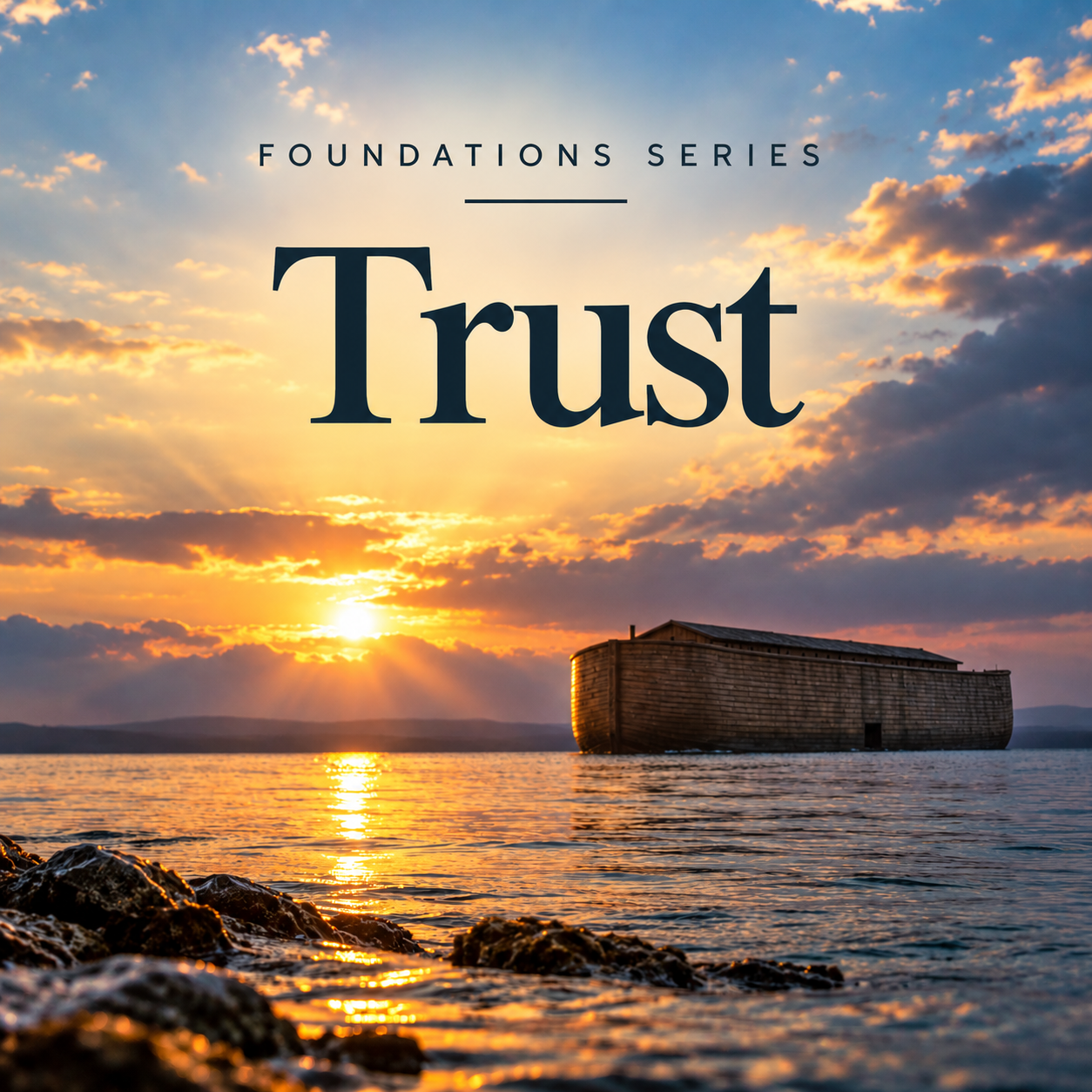
That is actually where Noah’s story begins, with God speaking and Noah being given something to do. Before the flood comes, there is wood to gather, an ark to build, and a set of instructions that will require far more than an evening of his time. Noah knows what God has asked of him, but he has yet to experience the waters through which this vessel will carry his family. Each part of the preparation requires him to depend on the word of the One who sees what lies ahead.
Trusting God’s Direction When It Makes No Sense to the World
13 So God said to Noah, “I have decided to destroy all living creatures, for they have filled the earth with violence. Yes, I will wipe them all out along with the earth! 14 “Build a large boat from cypress wood and waterproof it with tar, inside and out. Then construct decks and stalls throughout its interior. 15 Make the boat 450 feet long, 75 feet wide, and 45 feet high. 16 Leave an 18-inch opening below the roof all the way around the boat. Put the door on the side, and build three decks inside the boat—lower, middle, and upper. 17 “Look! I am about to cover the earth with a flood that will destroy every living thing that breathes. Everything on earth will die. 18 But I will confirm my covenant with you. So enter the boat—you and your wife and your sons and their wives. 19 Bring a pair of every kind of animal—a male and a female—into the boat with you to keep them alive during the flood. 20 Pairs of every kind of bird, and every kind of animal, and every kind of small animal that scurries along the ground, will come to you to be kept alive. 21 And be sure to take on board enough food for your family and for all the animals.” 22 So Noah did everything exactly as God had commanded him.
Genesis 6:13-22, NLT
When God speaks to Noah, He describes a world filled with violence. The brokenness we encountered in the garden has spread, and now the earth is marked by the harm people inflict on one another. Into that world, God gives Noah a task that will require him to order his life around something he has never experienced. He is to build an ark because a flood is coming, and everything about that undertaking depends on whether he trusts the One who has told him to begin.
God’s instructions are remarkably specific. The ark is to be 450 feet long, 75 feet wide, and 45 feet high, with compartments inside and three levels. Noah is told where to place the door and to coat the vessel inside and out with pitch. These are directions he can follow, even though he cannot yet see all that they are preparing him for. We need to picture this man who is being asked to measure a piece of wood and carry out the next part of the work without knowing what it will feel like when the waters begin to rise. His understanding of the future is limited, but the work God has placed before him is clear.
That is often where trusting God becomes difficult for us. We want to know enough about the outcome to decide whether the obedience will be worth it. We want to understand how the decision will affect our family, what it will cost, and whether the people around us will understand. Those concerns matter, but there are times when we have prayerfully sought God’s direction, examined it through Scripture, and listened to faithful counsel, and we still cannot see how everything will come together. We reach a point where moving forward means depending on God’s wisdom beyond the limits of our own.
Before Noah begins that journey, God gives him a promise. In verse eighteen, He says, “But with you I will establish my covenant.” We often remember the covenant that comes after the flood and is represented by the rainbow, but here, before the waters arrive, God is already speaking of a future with Noah and his family. Alongside the warning of judgment is God’s commitment to continuing His relationship with the people He created. Noah’s confidence has somewhere to rest as he undertakes the work, because the God who tells him what is coming also promises that their story will continue beyond it.
And some of the work is wonderfully ordinary. Noah must gather food for his household and for the animals. Alongside the enormous task of constructing the ark are the daily necessities of sustaining life within it. We can become so focused on the extraordinary dimensions of this story that we overlook the practical preparation God requires. Faithfulness includes making provision for others, attending to details, and completing work that may never seem especially spiritual. Genesis closes this part of the story by telling us that Noah did all that God commanded him. His trust becomes visible through the things he actually does.
Yet there is something striking about the instructions. God tells Noah how to build the vessel, but if you notice the recorded directions contain no rudder, sails, or oars. Noah is given no instruction for steering it. The Hebrew word for this ark is tebah, the same word used for the basket in which Moses’ mother places her infant son among the reeds. In both stories, life is preserved within a vessel through waters that threaten it, and those being carried cannot navigate their own way to safety. Noah can follow every measurement and carefully complete every part of the preparation, but once the waters rise, he will have to entrust himself to God in a new way. The ark he builds in obedience will become the place where he will have to learn to depend on God through a journey he cannot control.
Trusting God’s Protection Through the Storms and Waiting in Life
17 For forty days the floodwaters grew deeper, covering the ground and lifting the boat high above the earth. 18 As the waters rose higher and higher above the ground, the boat floated safely on the surface. 19 Finally, the water covered even the highest mountains on the earth, 20 rising more than twenty-two feet above the highest peaks. 21 All the living things on earth died—birds, domestic animals, wild animals, small animals that scurry along the ground, and all the people. 22 Everything that breathed and lived on dry land died. 23 God wiped out every living thing on the earth—people, livestock, small animals that scurry along the ground, and the birds of the sky. All were destroyed. The only people who survived were Noah and those with him in the boat. 24 And the floodwaters covered the earth for 150 days.
Genesis 7:17–24
Once Noah and his family are inside the ark, along with the animals, Genesis tells us that the Lord shut him in. Noah has followed the instructions, completed the construction, and gathered the food, but God is the One who closes the door. Soon the waters begin to rise, and the vessel Noah built is lifted from the ground. He has done what God asked him to do, and now all he can do is Trust God to carry them through what comes next.
We might expect that moment to bring a sense of relief, knowing that God has closed them safely inside, but I want you to picture what is happening outside the ark because the storm is just beginning. Noah’s obedience has brought him into the middle of an experience he cannot control. Sometimes we struggle with that in our own lives because we have prayed about a decision, sought God’s guidance, and followed where we believed He was leading, only to find ourselves facing something difficult. We begin wondering whether we heard Him correctly or whether we should have done something differently. Noah is where God told him to be, and the waters are still rising.
Some of us have prayed through an illness, cared for someone we love, or tried to make the right decision for our family, and we still find ourselves afraid of what might happen next. We can bring that fear to God without pretending it has already gone away. Trusting His care does not mean we will understand everything we experience or be spared the pain of loss. Noah and his family are being preserved within the ark while the world they have known, and unfortunately people they love and cared for, are disappearing around them. The passage leaves room for us to recognize how much a person can endure while still being held by God.
Most of us remember the forty days and forty nights of rain, but the dates in Genesis tell us that Noah remains in the ark for more than a year. The rain stops, yet there is still nowhere for him to go. His family has made it through the downpour, but they must continue living within the ark while the waters recede. There are animals to feed, daily needs to attend to, and no clear indication of how much longer they will be there. Noah has to continue caring for what God has entrusted to him while waiting for a future he cannot yet see.
We all know that kind of waiting. Maybe the treatment has ended but our strength has not returned. The funeral can be over, but we are still learning how to live without the person we love. A difficult season in our life has begun to improve, but we do not know what life will look like on the other side of it. People may assume we are ready to move forward because the immediate crisis has passed, while we are still trying to find our footing. Those days can stretch our trust as much as the storm itself, especially when we have no answer to the question of how much longer it will take.
Then chapter eight begins with the words, “God remembered Noah.” We should not hear that as though God suddenly remembered that Noah was out there waiting. Throughout this journey, Noah has remained within His care, and now the story describes God acting faithfully toward him and every living creature in the ark. God sends a wind over the earth, and the waters begin to recede. We are given that view of what God is doing while Noah is still inside, with no new instruction recorded for him at that moment. There is more happening than Noah can see from where he is waiting.
As the waters fall, the ark comes to rest on the mountains of Ararat, but even then Noah cannot leave. Months pass between the ark coming to rest and his family stepping onto the ground. We can imagine how eager they might have been to get outside, but the earth is still becoming ready to receive them. In our own waiting, we may see genuine progress without being ready for everything that comes next. Strength can return gradually, healing can take time, and a new beginning may require preparation we would prefer to hurry through. We can be grateful for what has changed while continuing to depend on God for what remains unfinished.
Eventually, the dove Noah sends out returns with a freshly plucked olive leaf. After months surrounded by water, he has evidence that the waters have receded and vegetation is accessible again. He receives that encouragement and waits another seven days before sending the dove out once more. There are times when we receive encouragement in much the same way, through a little strength returning, a conversation that brings comfort, or an opportunity that helps us begin to imagine a future. We still have questions, and we may still have waiting ahead of us, but those moments give us something to receive with gratitude. Noah continues watching and waiting, trusting the God who has carried him through the flood to direct him when it is time to leave.
Trusting God as We Take the First Steps of Faith
13 In the six hundred first year, in the first month, on the first day of the month, the waters were dried up from the earth, and Noah removed the covering of the ark and looked and saw that the face of the ground was drying. 14 In the second month, on the twenty-seventh day of the month, the earth was dry. 15 Then God said to Noah, 16 “Go out of the ark, you and your wife and your sons and your sons’ wives with you. 17 Bring out with you every living thing that is with you of all flesh—birds and animals and every creeping thing that creeps on the earth—so that they may abound on the earth and be fruitful and multiply on the earth.” 18 So Noah went out with his sons and his wife and his sons’ wives. 19 And every animal, every creeping thing, and every bird, everything that moves on the earth, went out of the ark by families.
Genesis 8:13-19
Throughout the waiting, Noah has been paying attention to what is happening around him. He opens the window, sends out the birds, and eventually removes the covering of the ark so he can see the ground for himself. He uses what is available to him to understand his circumstances, even as he continues waiting for God’s direction. We can do the same when we are trying to discern what comes next. We can ask questions, seek counsel, consider the opportunities before us, and pray about what we are seeing. Waiting faithfully includes preparing ourselves to respond when it is time to move.
Then God speaks to Noah again and tells him to come out of the ark with his family and bring the animals with him. After all those months, the time has come to leave. The place that has carried them through the flood has fulfilled its purpose, and now God is calling them into the world beyond its walls. Noah followed God’s direction when he built the ark, and he must follow it again as he steps onto the ground.
We are not told whether Noah hesitates, and we should leave that part of his experience where Scripture leaves it. We do know that he is entering a world profoundly changed from the one he left. His family has survived, but the familiar life around them is gone, and there is work ahead that they have never had to undertake before. God tells them to come out, and Noah responds without being given a detailed explanation of how they will rebuild their lives. He has enough direction to take the next step, and that step will require him to continue depending on God.
Some of us know how difficult beginning again can be. We have spent so much time getting through a particular season that we hardly know what to do when an opportunity finally opens before us. We may have prayed for that opening and still feel uncertain when it comes. Returning to something after an illness, accepting a new responsibility, or learning to live after a loss can ask more of us than we expected. We bring everything we have been through into that moment, and we may need time, help, and encouragement as we move forward. The God we depended on through the waiting is still the One we can turn to as we begin.
When Noah comes out, his first recorded act is to build an altar to the Lord. Before the passage describes a house being built or a field being planted, it shows us Noah worshiping. There is plenty of work ahead, but he begins by acknowledging the One who has brought his family through. His offering gives gratitude a place within the new beginning. We can become so focused on catching up, getting settled, and figuring out our next responsibilities that we move past the opportunity to thank God for the grace that has sustained us. Noah begins his life on the ground with his attention turned toward the Lord.
20 Then Noah built an altar to the Lord and took of every clean animal and of every clean bird and offered burnt offerings on the altar. 21 And when the Lord smelled the pleasing odor, the Lord said in his heart, “I will never again curse the ground because of humans, for the inclination of the human heart is evil from youth; nor will I ever again destroy every living creature as I have done.
As God receives Noah’s offering, He speaks of the human heart, and we hear something familiar from before the flood. Humanity’s inclination toward evil remains. The world has changed, but people still need the grace of God within them. That brings us back to what we considered last week in the garden, because a change in our circumstances does not automatically heal the brokenness we carry. We can begin a new job, move into a new home, or come through a difficult season and still bring our pride, resentment, and desire for control with us. Beginning again gives us an opportunity to place those parts of our lives before God too, allowing His grace to shape the people we are becoming.
God’s response looks toward a future sustained by His faithfulness. He promises the continuing rhythms of seedtime and harvest, cold and heat, summer and winter, day and night. Noah and his family will have ground to cultivate and a life to build within that provision. They will still have to work, and the human heart will still need God’s transforming grace, but their future rests within His continuing mercy. As we consider the steps before us, we can bring our gratitude, our uncertainty, and our need for help to the same faithful God. We have depended on Him to carry us through, and we can continue depending on Him as we learn how to live in what comes next.
Conclusion
As we leave Noah’s story this morning, let’s take a moment and think about where we find ourselves within it. Perhaps you know there is something God is asking you to do, but you have been waiting until you can understand how it will all work out before taking that first step. Perhaps you are doing everything you know to do and still feel surrounded by uncertainty. Or perhaps an opportunity to begin again is before you, and taking that first step feels harder than you expected. Each of those places asks us to consider whether we are willing to put our lives in God’s care when we cannot see what comes next.
Earlier, we spoke about trust as assured reliance on someone’s character, ability, strength, or truth. Noah gives us a picture of that reliance through the work of his hands, the months of waiting, and his willingness to leave when God calls him. His circumstances change throughout the story, but he continues responding to the same faithful God. We can bring our changing circumstances to Him too, along with the questions and fears that come with them.
In our reading from Psalm 25, we heard a prayer asking God to show us His ways, teach us His paths, and guide us in His truth. That is a prayer we can carry into this week. We can ask Him to help us recognize the work He has placed before us, sustain us through what remains unresolved, and give us courage to respond when it is time to move forward. We can also make room to remember His mercy and thank Him for the ways He has already cared for us.
Whatever part of the journey you are living through, bring it honestly before God. There may be a step you can take today, a responsibility you can faithfully attend to, or a burden you need help carrying through another week of waiting. You do not have to see the whole course before you can depend on Him. The God who remembered Noah has not forgotten you, and you can place what comes next in the care of the One who holds you now.
Comments are closed