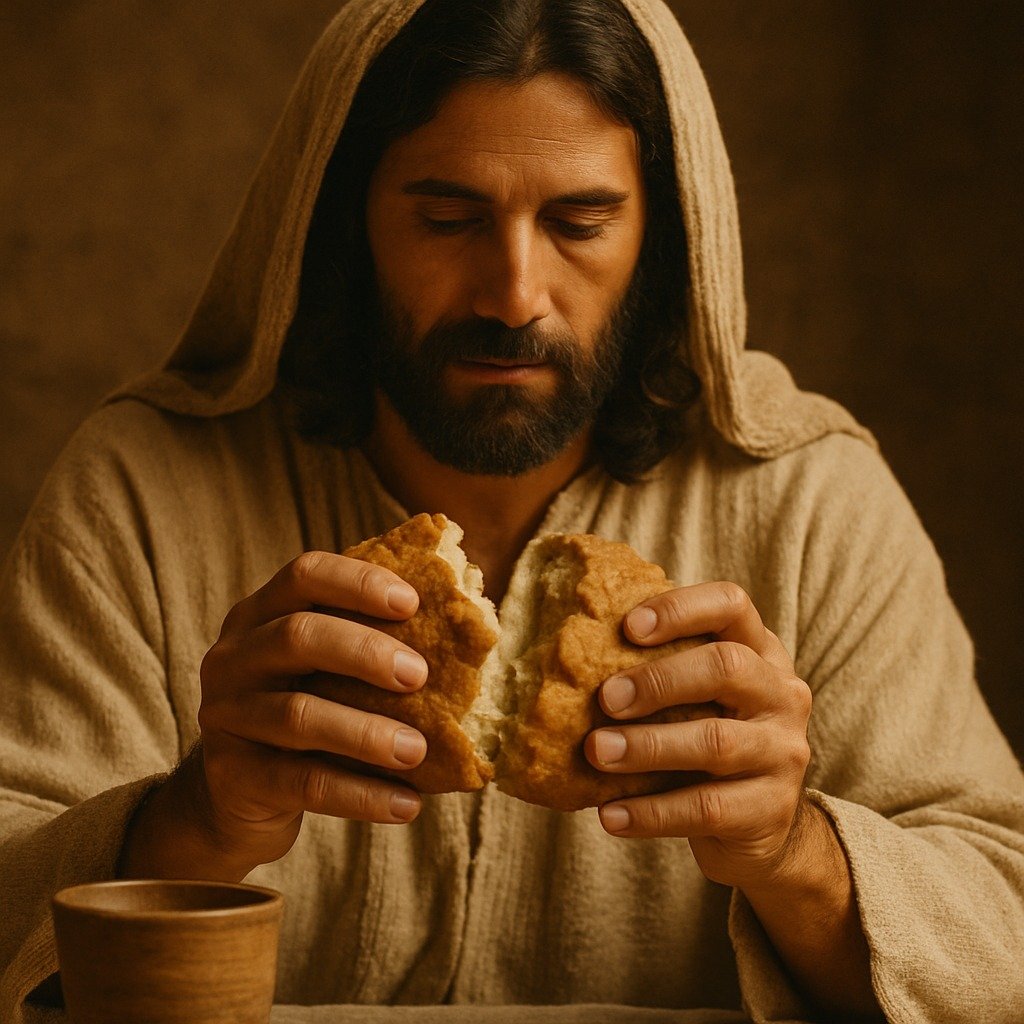
John 6:25–59
Introduction
This morning, as we continue our journey through the book of John, we are going to cover a passage that many preachers skip because it can be divisive, some even refer to it as the cannibalism passage. But I’m convinced that this passage continues to be critical for us to remember and ultimately a source of encouragement for our congregation if we choose to see it for it’s true depth.
History gives us examples of leaders who were admired until they said or did the one thing their followers couldn’t accept. Margaret Thatcher is a good example. She was the longest-serving British Prime Minister of the 20th century, known as the “Iron Lady” for her strength and resolve. But in the late 1980s she introduced what was called the “poll tax.” Instead of taxing people based on the value of their homes, it charged every adult the same flat fee.
On paper, it was meant to be fair — everyone paying their share. But in practice, it did the opposite. The wealthy, including noble families with large estates, often saw their bills drop. Meanwhile, ordinary people suddenly owed far more. The ones who had much lost little, and the ones who had little were asked to carry more. The crowds turned against her, and the policy cost her the support of her party and, ultimately, her position.
The same thing happens in John 6. Crowds followed Jesus gladly when He gave them bread and fish. But when He said, “Unless you eat my flesh and drink my blood, you have no life in you,” many turned back and followed Him no more. To them, it was one step too far. And here’s our theme for today: following Christ will lose you followers. People will walk away when His teaching presses beyond their comfort. The Bread of Life is not always popular, but He is always true.
Truth Divides
The day before, Jesus had fed the five thousand with five loaves and two fish. The crowd had eaten until they were satisfied, and they marveled at the miracle. But the next day, their stomachs were empty again, and they went searching for Him, not because of who He was, but because they wanted another free meal. Jesus confronted them directly: “Do not work for food that spoils, but for food that endures to eternal life” (John 6:27). It was a hard shift — from physical bread to eternal life. And that’s where the grumbling began.
The gospel always exposes motives. Verse 41 tells us, “The Jews there began to grumble about him because he said, ‘I am the bread that came down from heaven.’” By verse 60, even some disciples admitted, “This is a hard teaching. Who can accept it?” And by verse 66 we see the heartbreaking result: “From this time many of his disciples turned back and no longer followed him.” The truth divided them. They were content with miracles, but they recoiled at surrender.
This kind of division is not accidental in Scripture; it is often the very means God uses to reveal who belongs to Him. Jesus Himself warned in Matthew 10:21, “Brother will betray brother to death, and a father his child; children will rebel against their parents and have them put to death.” These are not words we place on inspirational posters. They are words that remind us that the call of Christ divides even the closest of bonds. The gospel is not only a bridge; sometimes it is a sword.
John Wesley, reflecting on this passage, remarked, “The preaching of Christ is the touchstone of spirits: by it, men are discovered; some are softened, and some are hardened.” For Wesley, Christ’s words acted like fire: they purified some and repelled others. This is exactly what we see in John 6. The crowd admired the signs, but when confronted with the substance, they turned away. The fire revealed what was truly in their hearts.
This theme runs through all of Scripture. Amos declared, “Do two walk together unless they have agreed to do so?” (Amos 3:3). The prophet’s point was that walking with God requires agreement with His ways, and if a person will not agree, they will fall away. Micah 7:6 speaks of the day when “a son dishonors his father, a daughter rises up against her mother.” These warnings echo the reality that the kingdom divides, even within households. To follow Christ is to accept that loyalty to Him will sometimes put us at odds with those we love.
We see this lived out in the lives of the prophets. Jeremiah was beaten and thrown into a cistern for proclaiming God’s word. Elijah was pursued by Ahab and Jezebel until he hid in the wilderness, lamenting that he was the only prophet left. Even Amos was told to go back home, unwelcome in Bethel because the truth he preached cut against the grain. The Word of the Lord does not leave things as they are; it divides light from darkness, truth from error, loyalty from disloyalty.
For the early Methodists, this was not an abstract idea. John Wesley often noted that preaching holiness and heart religion divided communities. Some were stirred to repentance and joy, while others mocked, resisted, or even hurled stones. In his journal, Wesley once wrote, “Some contradicted, and some mocked; but the power of the Lord was present to wound as well as to heal.” Wesley recognized that gospel preaching always forces a choice. Christ’s words never leave us neutral.
And this division is not meant to harm, but to refine. When Jesus allowed the crowds to walk away, He was not failing as a teacher. He was pruning as a Savior. As Paul would later write to the Corinthians, “There must be differences among you to show which of you have God’s approval” (1 Cor. 11:19). Division exposes loyalty. It is God’s way of separating shallow interest from true discipleship. When the crowd thinned, the ones who remained would become the foundation stones of the church.
Think of Peter’s confession in the midst of this moment. When Jesus asked, “You do not want to leave too, do you?” Peter answered, “Lord, to whom shall we go? You have the words of eternal life” (John 6:68). That is the essence of faith. The crowd walked away because they wanted bread. Peter stayed because he had tasted the Bread of Life. The crowd saw a hard teaching. Peter saw the only source of life. It was division, yes, but it was holy division — the kind that revealed the true.
This is where the message presses home for us. Following Christ will lose you followers. Some will admire Him at a distance but shrink back when the demands get personal. Some may even be in your own family, and Jesus Himself prepared us for that. But take courage: losing followers is not failure. It is often God’s way of purifying and empowering His people. As Wesley put it, “The gospel of Christ knows no neutrality: it makes all better or worse.” And so the question remains: when others turn back, will we walk away too, or will we stand with Peter and say, “Lord, to whom shall we go? You have the words of eternal life”?
Faith Internalizes
What made the crowd stumble was not only the strangeness of Jesus’ words, but the depth of His demand. He said, “Unless you eat the flesh of the Son of Man and drink his blood, you have no life in you” (John 6:53). These words are not about a casual association with Christ or a polite admiration from a distance. They are about total dependence, about Christ becoming the very nourishment of our souls. This is no small demand. Bread is not an accessory to life; it is life itself. And so Jesus places Himself at the center of existence. To eat and drink of Him is to say, “Without You I cannot live.”
The power of this moment lies in how it redefines what it means to be a disciple. Israel had long known that bread from heaven was God’s gift of life. When the people wandered in the wilderness and cried out for food, God gave them manna each morning, a mysterious bread that sustained them (Exod. 16:15). But even then, the manna had to be gathered and eaten daily. It was not enough to look at it or to talk about it; they had to take it in. Elijah, weary and despairing under the broom tree, was strengthened by bread baked on hot stones that carried him all the way to Mount Horeb (1 Kings 19:6–8). Again, the lesson was clear: God’s provision of bread is more than calories. It is divine strength for the journey. When Jesus calls Himself the Bread of Life, He is not speaking of filling an empty stomach but of filling an empty soul.
This is why the language of eating and drinking is so powerful. It is visceral, intimate, and unavoidable. To eat is to take something outside of yourself and make it part of you. To eat Christ is to allow Him into the deepest parts of your life until He becomes inseparable from your identity. True faith is not intellectual assent alone but a feeding upon Christ, a trust so complete that His life becomes your own. Paul echoes this truth when he writes, “It is no longer I who live, but Christ who lives in me” (Gal. 2:20).
The prophets anticipated this kind of union. Jeremiah declared, “Your words were found, and I ate them, and your words became to me a joy and the delight of my heart” (Jer. 15:16). Ezekiel was commanded to eat the scroll of God’s word, and when he did, it filled his stomach and sweetened his mouth (Ezek. 3:1–3). These images are not about external hearing but internal receiving. To eat the Word is to make it part of you, to be nourished by it, shaped by it, sustained by it. Now, in Christ, the Word has become flesh. The demand is not simply to eat the Word symbolically but to take Christ Himself as food and drink. This is not poetry; it is promise. The Bread of Life is given so that those who feed upon Him may be transformed from within.
Adam Clarke describes it in a way I really like: “Christ, being the Bread of Life, must be received by faith, else the soul continues famished and dead.” Feeding upon Christ was not a metaphor for good feelings or inspiring thoughts. It was the very means by which a believer is united to Christ and made alive in Him. This is sanctifying grace at work: grace that does not leave us where we are but brings us into new life.
And when we allow it to, the transformation that comes from ingesting Christ is radical. It is not content to leave us as forgiven sinners who continue unchanged. Sanctifying grace insists on renewal. Paul told the Corinthians, “If anyone is in Christ, the new creation has come: The old has gone, the new is here!” (2 Cor. 5:17). This new creation is not cosmetic; it is core. The old appetites give way to new desires. The old habits yield to new holiness. The old identity rooted in sin is replaced by a new identity rooted in love. And this is not our doing. It is the life of Christ in us.
This is not about sinless perfection but a heart so filled with the love of God and neighbor that love governs everything we are and do. When Christ is taken in as bread, sanctifying grace works until love becomes the organizing principle of life. This is no surface religion. This is inward holiness, the life of Christ saturating the soul.
This internalization, however, is not passive. Just as Israel had to gather manna each morning, so we as believers must continually feed on Christ through the means of grace. Wesley emphasized Scripture, prayer, fasting, the Lord’s Supper, Christian fellowship, and acts of mercy as daily bread for the soul. He said, “The chief of these means are prayer, whether in secret or with the great congregation; searching the Scriptures, which implies reading, hearing, and meditating thereon; and receiving the Lord’s Supper, eating bread and drinking wine in remembrance of Him.” These practices are not mere duties. They are the table where Christ offers Himself afresh. They are how sanctifying grace takes root and grows.
To illustrate, think of a patient in a hospital who cannot eat by mouth. An IV drip keeps them alive. It is steady, constant, necessary. They do not say, “I will try the IV once a week.” They need continual nourishment. Faith is like that. It is not a snack to be sampled occasionally but a continual feeding upon Christ. It is daily bread, daily grace, daily dependence. Sanctifying grace shapes us not in one dramatic instant but through constant reliance on the Bread of Life.
This is why the call to eat and drink Christ is so urgent. It is not an invitation to ritual alone, nor is it a challenge to intellectual debate. It is a summons to transformation. What we take in becomes what we are. If we feast on approval, success, or entertainment, those things shape us. But if we feed on Christ, His life becomes ours. His holiness becomes our holiness. His love becomes our love. That is the heart of sanctifying grace: Christ not merely believed in but ingested, not admired but internalized, not outside of us but alive within us.
Transformation Multiplies
One thing I want to call out is that when many walked away in John 6, Jesus did not run after them. He did not dilute His message to make it more palatable, nor did He attempt to rebrand His teaching so that the masses would return. Instead, He turned to those who remained and pressed the question: “Do you also want to leave?” (John 6:67). That moment is as sobering as it is powerful. Jesus is content to let the crowd depart, because His mission is not built on popularity but on transformation. The ones who stay — Peter, James, John, and the others — are not the elite, nor are they without flaws, but they are willing to remain. And in remaining, they are transformed. Those few who stayed close to Him would eventually become the foundation stones of the church.
This pattern — pruning that leads to strength — is not new. It runs throughout the story of God’s people. Take Gideon’s army, for example. Gideon began with thirty-two thousand men to fight the Midianites, but God said, “That’s too many.” Through two rounds of reduction, God cut the army down to just three hundred. Why? So that Israel could never claim the victory as their own. Judges 7:2 records God’s reasoning: “You have too many men. I cannot deliver Midian into their hands, or Israel would boast against me, ‘My own strength has saved me.’” By pruning the army, God made it clear that the victory would be His. The few who remained became a multiplying force, defeating the Midianites in a way that left no doubt about God’s power. What looked like weakness was the very condition for strength.
The wilderness generation tells a similar story. Israel wandered for forty years, and in that time, an entire generation fell. They grumbled, doubted, and refused to trust God’s promise. But the faithful remnant — Joshua, Caleb, and the children of that generation — entered the Promised Land. Numbers shrank, but God’s plan endured. Deuteronomy 7:7 reminds us, “The Lord did not set his affection on you and choose you because you were more numerous than other peoples, for you were the fewest of all peoples.” God delights to work through a faithful remnant, shaping a people who depend on Him rather than on their own numbers or strength.
Jesus Himself used the language of pruning to describe this dynamic. In John 15:5 He said, “I am the vine; you are the branches. If you remain in me and I in you, you will bear much fruit.” Then in verse 2 He explained, “Every branch that bears fruit He prunes, that it may bear more fruit.” Pruning is not punishment; it is preparation. The branches cut away are not wasted effort but part of God’s design to strengthen what remains. The disciples who stayed in John 6 did not understand everything Jesus meant, but by staying they were positioned for transformation. They abided in Him, and over time, they bore fruit that multiplied across the world.
John Wesley often reflected on this truth in his sermons and journals. He faced seasons when the Methodist movement itself shrank under opposition or scandal. Sound familiar? Yet Wesley wrote, “God frequently works by remnant, by little flock, by handfuls.” He knew that what matters is not how many stand at first, but how deeply those who remain are transformed. Wesley preached that pruning is God’s way of purifying the church, ensuring that those who stay are those who hunger and thirst after righteousness. Sanctifying grace, he insisted, is what makes disciples steadfast: “There is no holiness without perseverance, and no perseverance without holiness.” A smaller but sanctified community, shaped by inward holiness, is always more fruitful than a larger but shallow one.
The fruit of this transformation is multiplication. When disciples are deeply rooted in Christ, they reproduce His life in others. This is not addition but multiplication. Peter, who once wavered, preached at Pentecost and three thousand were added in a single day. John, the son of thunder, became the apostle of love, writing letters that continue to shape the church’s life centuries later. James, once a skeptic, became the leader of the Jerusalem church. Their transformation was not for themselves alone; it was the seedbed of a multiplying movement.
This multiplication is not mechanical; it is organic. Just as bread once eaten becomes part of the body, Christ once internalized multiplies outward in witness. Early Methodists embodied this principle. Class meetings were small, intimate, and often unimpressive in size, yet from those circles emerged the global movement to which we belong. Wesley did not measure success by how many gathered at a revival meeting, but by how many lives were transformed into holiness and love. He once remarked, “Give me one hundred men who fear nothing but sin and desire nothing but God, and I care not whether they be clergy or laymen, such alone will shake the gates of hell and set up the kingdom of heaven on earth.” For Wesley, multiplication came not from crowds but from transformed cores.
And that’s what I think God has for us today. When we look around at shrinking churches or declining numbers, it is easy to despair. But perhaps what feels like loss is really pruning. Perhaps God is shaping a community that depends not on size or popularity but on holiness and love. The ones who remain are not perfect, but they are being transformed by grace. And that transformation will bear fruit in ways that numbers never could. When a core of disciples lives out Christ’s love in authentic community, forgiveness flows, hospitality abounds, and witness shines. That kind of multiplication does not depend on programs or platforms but on lives filled with the Spirit.
Think again of Jesus with the Twelve at the end of John 6. The crowd had left, but He turned to the disciples and asked, “Do you also want to leave?” Peter replied, “Lord, to whom shall we go? You have the words of eternal life” (John 6:68). That confession became the hinge on which the future of the church swung. Out of that small remnant, Christ built His multiplying mission. Transformation is never about keeping the crowd; it is about forming a core that will carry the mission forward.
And so the encouragement for us is this: do not measure success by the size of the crowd or the smoothness of the journey. Measure it by the fruit of transformation. Pruning may feel painful, but it is God’s way of preparing for greater fruitfulness. Multiplication begins not with many but with a few who are transformed by grace. The crowd may leave, but the core will grow stronger. And in God’s hands, transformation multiplies disciples better than popularity ever could.
Closing
In verse 66 we read: “From this time many of his disciples turned back and no longer followed him.” And Jesus looked at the Twelve and asked, “You do not want to leave too, do you?” Peter answered, “Lord, to whom shall we go? You have the words of eternal life.”
That’s the choice. Some will walk away when Christ’s words are too hard. Some will stop following when discipleship costs too much. If you follow Him, you will lose followers. But what you gain is life.
Margaret Thatcher lost support because of her poll tax, but that moment did not define her legacy. She is remembered for her strength and her impact. Jesus lost the crowd in John 6, but that moment did not define His mission. The words they rejected became the very words that bring eternal life.
And the same is true for you. Your faith may cost you friends. Your obedience may cost you approval. Your witness may cost you followers. But that is not your legacy. Your legacy is life in Christ, eternal and abundant.
This is also true for us as a church. Here at Bates and at Trinity, we may not have crowds filling every pew. We may feel at times like a remnant — smaller than we hoped, fewer than we imagined. But remember Gideon’s army. Remember the disciples who stayed when the crowd walked away. What God can do with a faithful remnant is greater than anything the world can do with a crowd. If this remnant here is faithful, God will bless these congregations. He will use this community to bear fruit, to multiply, and to shine His light in Snow Hill, in Newark, and beyond…………………….
No responses yet