Judges 4
Introduction – Judges 4:1–3
The book of Judges is marked by a painful rhythm that repeats itself so often it almost becomes background noise. The Israelites again did what was evil in the sight of the Lord. Again. That word tells us everything we need to know. This is not a one time failure or a sudden collapse of faith. It is a long pattern of forgetfulness, followed by oppression, followed by desperation, followed by deliverance, followed by forgetting all over again.
Judges 4 opens in that familiar place. Israel is once again under the weight of an oppressor, this time under King Jabin of Canaan, whose military power is enforced by Sisera and his nine hundred iron chariots.
For Scripture, chariots are never just vehicles. They are symbols. In Exodus, Pharaoh’s chariots represented Egypt’s claim that Israel belonged to them and would never truly be free. In Judges, Sisera’s iron chariots represent Canaan’s claim that Israel’s future is permanently limited, that freedom is no longer possible. This is why later in psalms 20:7 scripture reminds us,
“Some trust in chariots and some in horses, but we trust in the name of the Lord our God.”
The detail about nine hundred iron chariots is not a military footnote; it is a theological claim. Once again, human power believes itself unstoppable.
Jewish teachers later noticed this echo as well, reading Sisera as a new Pharaoh figure, because once again Israel faces an oppressor who trusts chariots, only to discover that God will undo that power through water and unexpected means.
For twenty years, the text tells us, Israel cries out to the Lord. Twenty years of fear, limitation, and loss of freedom, until hope itself begins to feel distant.
And into that moment, God does not immediately send an army. God does not thunder from heaven. God raises people.
Judges 4 tells one story, but it unfolds through three movements, each revealing something essential about how God delivers His people. First, God raises Deborah, a judge and prophet, in a way that would have been culturally unthinkable. Second, God initiates deliverance through a battle that exposes human hesitation and imperfect faith. And finally, God completes His work through Jael, in a quiet place, in a way no one would have expected and many of us would rather avoid.
This is not a story about heroes. It is a story about a faithful God who works through willing people, even when the world is broken and the outcome is uncomfortable.
God Raises Deborah — Judge and Prophet
Judges 4:4–7
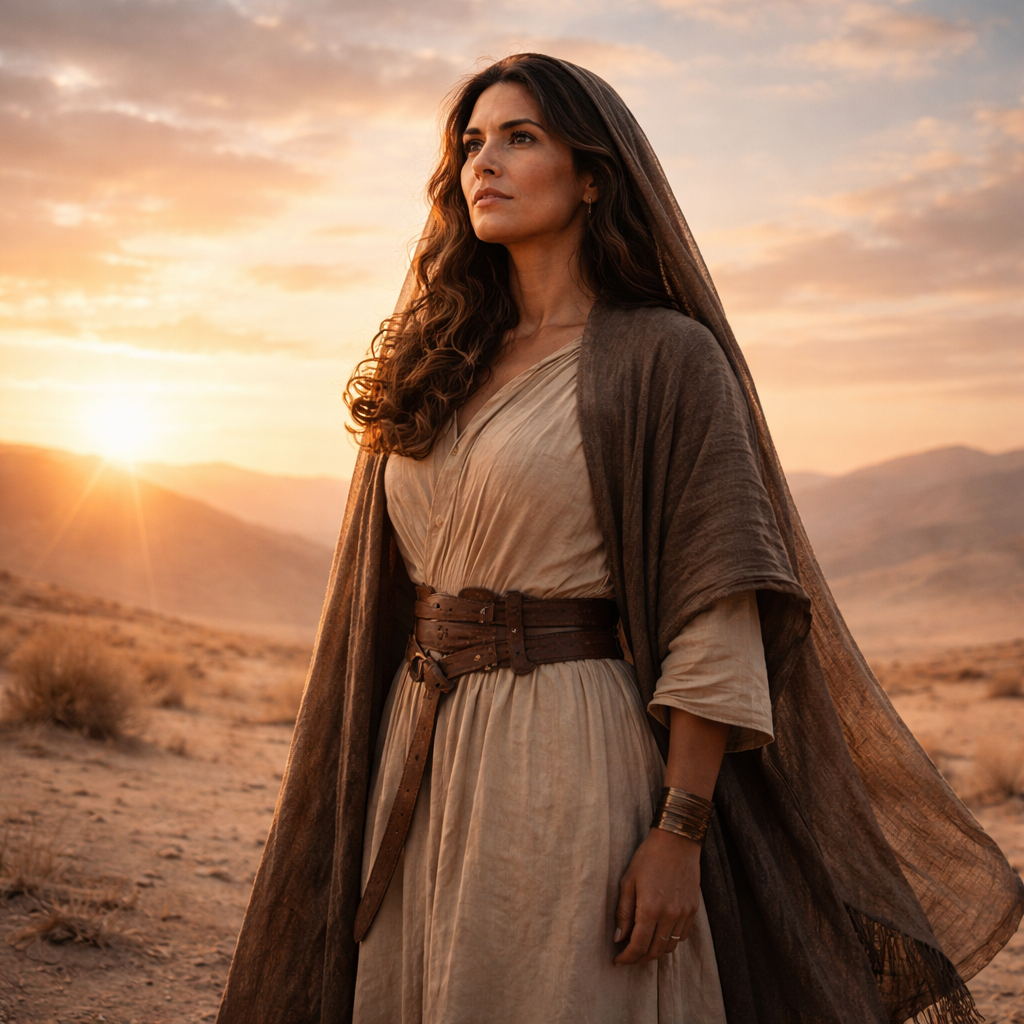
Before a single sword is raised or a single command is given, Judges introduces us to Deborah, and it does so without explanation or defense. We are told that she is a prophet, that she is judging Israel at that time, and that the people come to her for guidance. The text does not pause to explain how unusual this would have been. It does not justify her authority. It simply states it as fact.
This moment in Israel’s history sits between two defining eras. The people have been liberated from slavery in Egypt, but they have not yet asked for a king. There is no Saul, no David, no centralized monarchy. This is a fragile, in between season, marked by instability, moral drift, and repeated cycles of failure. Leadership in this period is not inherited or elected. Judges are not kings and they are not priests. They are raised up by God in moments of need to deliver, to guide, and to restore order when the nation begins to fracture.
Prophets, meanwhile, are those who hear from the Lord and speak God’s word into the life of the people. They do not rule by force. They lead by discernment and truth.
Deborah is doing both.
She is judging Israel, settling disputes and guiding the people, and she is hearing directly from God and speaking with prophetic authority. That combination alone makes her extraordinary. Yet Scripture does not treat her as a problem that needs explanation. It treats her as a gift God has provided at exactly the right moment.
In a culture where leadership, judgment, and public authority were overwhelmingly male, Scripture refuses to act surprised by the woman God has raised up. Deborah is not framed as a novelty or an exception. She is presented as faithful.
And this matters because part of why stories like Deborah’s are so important is that Scripture itself refuses to support the idea that women occupy a second class place in the work of God. Too often, a handful of New Testament passages are isolated and used to limit women’s calling, while the broader witness of Scripture is ignored. Judges 4 pushes back against that instinct not with argument, but with narrative.
At a moment when Israel is oppressed and afraid, God entrusts national leadership, spiritual discernment, and prophetic authority to a woman. Deborah is not advising quietly from the sidelines. She is leading publicly because God has called her to do so.
And she is not alone in this witness. Throughout Scripture, when God’s people are at risk, women repeatedly stand at the center of deliverance.
- Rahab recognizes God’s movement before anyone else in Jericho does.
- Esther risks her life to save her people when silence would have been safer.
- Ruth’s faithfulness reshapes the future of Israel itself.
Deborah belongs to this same stream of faithful obedience, not as an exception, but as part of a consistent pattern.
Deborah sits under the palm that will later bear her name, not on a throne or in a military camp, but in a place of listening and discernment. Leadership, in her case, is not loud or forceful. It is rooted in attentiveness to God and trust earned over time. People come to her because she hears from the Lord, and because her wisdom has proven dependable.
And when God is ready to move toward deliverance, it is Deborah who speaks first.
She summons Barak and delivers God’s command plainly and confidently. The Lord has already gone ahead. The battle is already promised. The victory is not in question. Deborah does not hedge or soften the message. She speaks with the authority of someone who understands that obedience comes before explanation.
Deborah teaches us is that God does not wait for cultural permission to raise leaders. God does not call based on comfort, convention, or control. God calls based on faithfulness, availability, and obedience, often long before the crisis arrives.
The Battle Begins, and Human Hesitation Is Exposed
Judges 4:8–16
When Deborah finishes delivering God’s command, Barak responds with a sentence that reveals both his faith and his fear, saying,
“If you go with me, I will go. But if you do not go with me, I will not go.”
It is a moment that has often been read as weakness, and in some ways it is, but it is also a moment of honesty, because Barak does not deny that God has spoken, nor does he refuse the call outright. He believes God can act, yet belief alone does not erase fear, and so he looks for assurance, for presence, for someone who hears from God to walk with him into the uncertainty of battle.
And if we are honest, this is where many of us find ourselves more often than we would like to admit. We are willing to obey, but only if the conditions feel right, only if the path feels clear, only if someone else comes with us to steady our nerves and confirm that we are not about to step into failure alone. We trust God, but we still want a hand on the safety rail.
What makes this moment so striking is that Israel has already been told what faith in moments like this is supposed to look like. Long before Deborah and Barak, long before iron chariots and Canaanite kings, God spoke these words to Israel as they stood on the edge of the Promised Land:
“Be strong and courageous; do not be frightened or dismayed, for the Lord your God is with you wherever you go.” Joshua 1:9
That was not a suggestion, and it was not grounded in Israel’s strength or preparedness, but in God’s promised presence. Courage was never meant to come from confidence in circumstances; it was meant to come from trust in who God is and where God goes with His people.
Barak knows this story. He has inherited this faith. And yet, standing before Deborah, he chooses conditional obedience instead of courageous trust, not because he rejects God’s word, but because fear still has a voice in his decision making. “If you go with me, I will go” is not rebellion, but it is not bold faith either.
Deborah agrees to go with him, but she does not pretend that hesitation comes without consequence. She tells Barak plainly that the honor of victory will not belong to him, that God will still deliver Israel, but that the glory will go to a woman. This is not punishment, and it is not humiliation; it is revelation. God is not offended by Barak’s fear, but God also refuses to let fear determine where the credit lies.
And still, God’s purposes move forward, because the promise is not withdrawn and the mission is not canceled, even when fear shapes the way obedience unfolds. God does not revoke His word simply because Barak hesitates, and so the army advances, the enemy falls into panic, and the iron chariots that once seemed unstoppable fail, just as chariots always do when they are trusted more than the Lord. God continues to fight for His people, not because their faith is flawless, but because His purposes are steady, faithful, and never undone by human fear or uncertainty.
Yet hesitation does shape how we experience God’s work. Barak participates in deliverance, but he does not control it. He obeys, but he does not receive the honor he may have imagined. God invites trust, not management, and obedience, not negotiation.
Once again, Deborah’s leadership becomes clear, not through domination or withdrawal, but through truth spoken calmly and faithfully. She does not shame Barak for his fear, nor does she step aside when the situation becomes complicated. She walks forward in obedience and leaves the outcome in God’s hands.
The battle itself unfolds quickly, the enemy scatters, Sisera abandons his chariot and flees on foot, and for a moment it appears that the story has reached its conclusion, that the threat has been neutralized and the promise fulfilled.
But God is not finished yet.
Barak teaches us is that knowing God’s promises is not the same thing as trusting them, and that while God can and does work through hesitant obedience, Scripture consistently calls us toward bold and courageous faith, the kind of faith that steps forward not because the path feels safe, but because the Lord our God goes with us wherever we are called to go.
God Completes Deliverance Through Jael
Judges 4:17–24
Judges deliberately slows the story at this point, because the final act of deliverance does not happen on the battlefield, nor does it come through a general or an army claiming victory. Sisera does not fall in combat. Instead, he runs to a tent, to the home of Jael, the wife of Heber the Kenite, and the text pauses long enough for us to ask why this place, and why this person.
The answer lies in who the Kenites are.
The Kenites are descendants of Jethro, Moses’ father in law, a people connected to Israel not by blood, but by relationship. They are Hebrew adjacent, shaped by Israel’s story, familiar with Israel’s God, and sympathetic to Israel’s struggles, yet never fully absorbed into the tribes themselves. They live among God’s people without belonging to them, which places Jael in a unique and vulnerable position, close enough to be trusted, but distant enough to be overlooked.
That is why Sisera runs to her tent.
From his perspective, this is neutral ground. There is peace between his king and Jael’s household, and her lineage marks her as someone who is neither enemy nor threat. Hospitality is offered, milk is given instead of water, rest is promised instead of resistance, and Sisera settles into the false security that comes from assuming that alliances and proximity are enough to guarantee safety.
But Jael sees the moment differently, because she understands the story she stands inside.
She knows who Sisera is, and she knows what his power has done to Israel for twenty years. She knows that neutrality in the face of oppression does not end suffering, and that peace built on distance and compromise cannot hold when God moves to deliver His people.
The text tells us that she takes a tent peg and a hammer, the ordinary tools of her everyday life, and acts decisively. Judges does not rush this moment, and it does not soften it either. The scene is uncomfortable, and it is meant to be, not because Scripture is glorifying violence, but because it is refusing to pretend that deliverance in a broken world comes without cost.
Sisera is not merely a tired man seeking refuge. He is the commander of an oppressive force that has crushed Israel for decades, and his death marks the end of that suffering. God completes the deliverance He promised, not through public honor or military spectacle, but through a quiet act in a private place, carried out by someone whose story positioned her perfectly for this moment.
Earlier, Deborah said that the glory of this victory would go to a woman, and Judges 4 now shows us that God is not simply redistributing credit, but dismantling our assumptions about where power resides and how redemption unfolds.
Jael teaches us is that faith sometimes looks like recognizing the moment God has prepared through generations of story and relationship, and then acting decisively with what is already in our hands, trusting that the God who began the work will also bring it to completion, even when the way He does so challenges our expectations.
Conclusion: Being Willing When We Aren’t Ready
Judges 4 gives us three people, three responses, and one faithful God, and together they show us that deliverance rarely comes through a single kind of faithfulness, but through a God who works patiently, persistently, and purposefully through willing people in very different places.
Deborah teaches us what it looks like to be ready before the crisis arrives, to listen long before the command is given, and to lead not from position or force, but from attentiveness to God and trust built over time. Her faithfulness reminds us that God often prepares people quietly and faithfully long before the moment when obedience becomes visible.
Barak teaches us something different, but no less important. He reminds us that knowing God’s promises is not the same thing as trusting them fully, and that hesitation often lives right alongside belief. Barak is not rejected for his fear, and he is not removed from the story because of it. God still works through him. Yet his story gently but clearly shows us that hesitant obedience, while still obedience, shapes how we experience God’s work and often costs us the joy and confidence that bold faith can bring.
And then there is Jael, whose story reminds us that God often finishes His work through people we might overlook and in places we might dismiss, using ordinary tools and quiet moments to bring about decisive change. Her faithfulness shows us that there are moments when discernment must give way to action, when recognizing what God has been preparing is followed by the courage to act, even when the outcome is uncomfortable and the cost is real.
Together, these three stories tell us that God’s deliverance does not depend on perfect faith, flawless courage, or ideal circumstances. It depends on a God who is faithful to His promises and who calls His people, again and again, to be willing even when they do not feel ready.
The question Judges 4 leaves us with is not whether God can deliver, because Scripture has already answered that. The question is how we will respond when God invites us into the work He is already doing. Will we listen and prepare like Deborah, will we wrestle and hesitate like Barak, or will we recognize the moment and act like Jael?
And perhaps the deeper grace of this story is that God works through all three.
The same God who raised Deborah, who stayed with Barak, and who completed the work through Jael is still at work today, inviting us to trust Him not when we feel strong or certain, but when we are simply willing to say yes and take the next faithful step.
Comments are closed