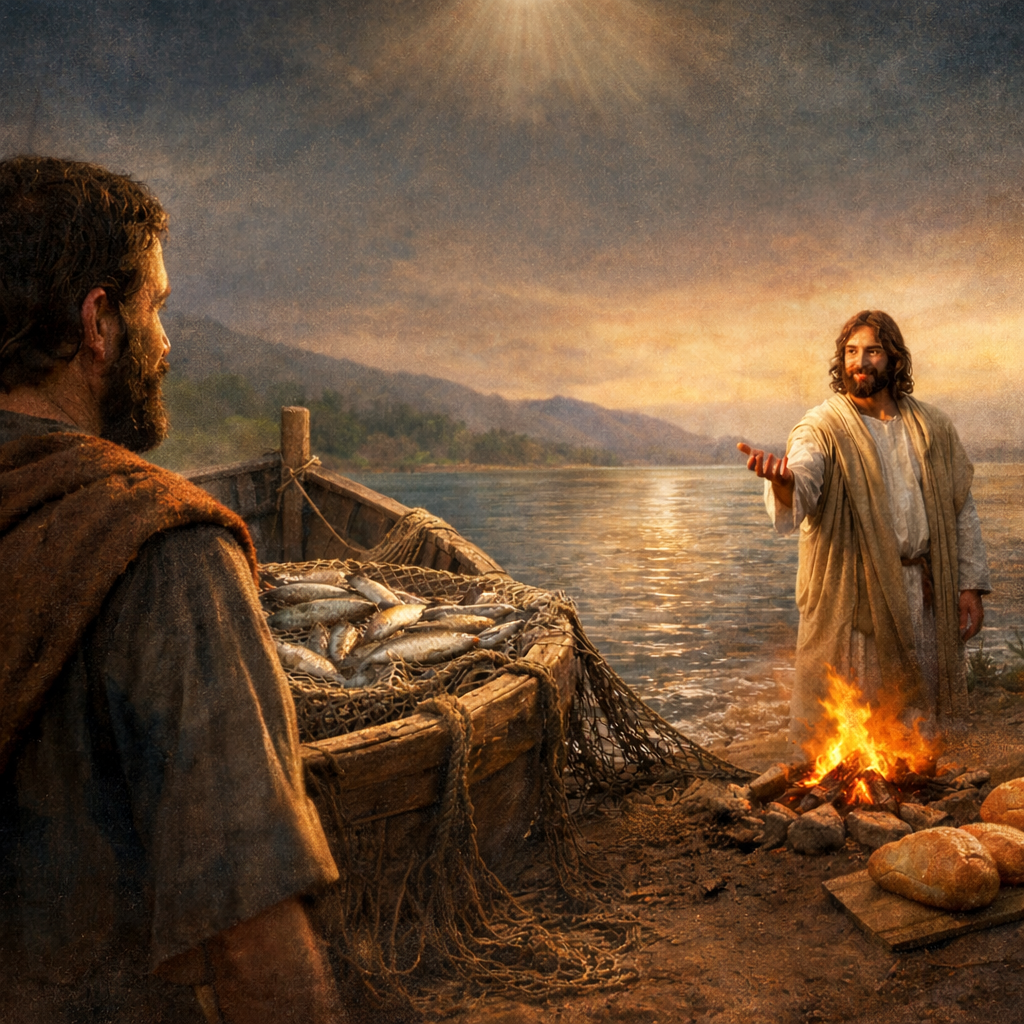
Text: John 20:1-27
Introduction
Over the past several weeks, we have been walking through the stories of women whose lives were woven into the unfolding work of God in ways both quiet and profound. We have stood with them in moments of courage and uncertainty, in seasons of waiting and obedience, in acts of service and expressions of worship. Some of their stories have been bold and visible, others almost hidden in the background of the text, and yet each one has revealed something essential about what it means to encounter God and to respond to Him.
We have seen faith that waits when the promise feels delayed, faith that steps forward when the path is unclear, faith that serves with humility and worships with abandon. And through each of these stories, there has been a thread that ties them all together, even if we have not named it directly until now. Again and again, these women found themselves in moments where God was present in ways that were not always obvious, not always expected, and not always easy to understand.
And now we come to the final voice in that story.
Not at the beginning of something new, but at what appears to be the end of everything.
Mary Magdalene does not enter the story in a moment of anticipation. She enters it in a moment of grief. She is not waiting for a promise to be fulfilled. As far as she understands, the promise has already been lost. The one she followed, the one who had changed her life, the one she had watched heal, teach, restore, and redeem, has been crucified, buried, and sealed behind a stone.
And so she comes to the tomb the way many of us come to moments in our own lives, carrying what feels like the finality of loss, trying to make sense of something that does not yet make sense, holding onto what she knows while standing in the middle of what she does not understand.
She is not looking for a miracle.
She is looking for a body.
And what she finds is something she does not recognize.
That may be one of the most honest places we can begin on Easter morning.
Because we tend to come into this day knowing how the story ends. We know about the empty tomb. We know the words that will be spoken. We know the declaration that Christ is risen. But if we are honest, there are still places in our lives where we stand with Mary, looking at circumstances that feel empty or confusing or unresolved, wondering where God is in the middle of it.
And the tension of this story is not just that Jesus is alive.
The tension is that He is present… and not yet recognized.
Mary stands at the center of the greatest moment in history, and at first, she does not see it for what it is. She is close. She is searching. She is faithful enough to remain when others have gone home. And still, she does not yet understand what is right in front of her.
And that is where this story begins to reach into our own lives.
Because there are moments when God is moving, and we do not see it.
Moments when He is present, and we do not recognize Him.
Moments when we are standing closer than we realize to what He has already done, and yet we are still asking where He is.
And so the question that unfolds from this story is not just about what happened on that morning.
It is about what happens when God meets us in ways we do not expect.
When God Is Present But We Do Not Recognize Him (John 20:1–15)
Mary arrives while it is still dark, and John tells us that not simply as a detail of time, but as a reflection of what is happening within her. This is not just the absence of light, but a lack of clarity, a moment where what is true has not yet been seen for what it is. And that is where she stands as she makes her way to the tomb, carrying with her everything she believes to be final.
She is not coming with expectation or hope. She had seen Him crucified. She had watched His body taken down. She knew exactly where He had been laid. There is no confusion in her memory, only sorrow in her steps. And so when she arrives and finds the stone already rolled away, she does not reach for possibility. She reaches for the only explanation that fits within what she already believes. “They have taken the Lord,” she says, as though even now the idea that God might be doing something new is still beyond what she can imagine.
Peter and John come, they look, they see what does not make sense, and then they leave, returning to what they know. But Mary does not. She remains. There is something about grief that does that. It holds us in places others move on from, keeping us close to what feels lost, as though staying near might somehow make it clearer, or at least make it feel less final.
And so she stands there, outside the tomb, weeping.
Not the kind of quiet tears that pass unnoticed, but the kind that come from somewhere deeper, the kind that carry the weight of everything she has seen and everything she now believes she has lost. And in the middle of that grief, she bends down and looks into the tomb once more, as if one more look might change something, or at least confirm what she already fears.
And what she sees should stop her.
Two figures in white, seated where the body of Jesus had been, one at the head and one at the feet.
John slows the moment down for us here, because this is not just a detail. It is a connection. Because at the very center of Israel’s worship stood the Ark of the Covenant, and on top of it was the mercy seat, with two cherubim positioned at either end. It was there, between those figures, that God’s presence dwelled, the holiest place imaginable, hidden behind the veil, entered only once a year by the high priest.
And when the high priest entered, he did not come empty handed. He came carrying blood.
Year after year, he would sprinkle it on the mercy seat as an act of atonement, a covering for sin, a way of restoring what had been broken. The Hebrew word for that place carries the idea of reconciliation, of something being dealt with so that relationship could be restored. But it was never final. It was repeated again and again, a sign that something greater was still needed.
Now look again at the tomb.
Two figures.
One at the head.
One at the feet.
And between them, not the body of Jesus, but the place where His body had been laid, where His blood had already been given.
What was once hidden behind a veil has now been brought into the open. The place of atonement is no longer confined to the temple. It is revealed in the tomb. Not as something that must be repeated, but as something that has already been completed.
- No priest entering on behalf of the people.
- No sacrifice needing to be offered again.
Because the true High Priest has already come, and He has already offered His own blood, not as a temporary covering, but as a once and for all act of redemption.
And now the place where that sacrifice was made stands empty, not because nothing happened there, but because everything did.
And Mary is standing right there in the middle of it.
- In the place where sin has been dealt with once and for all.
- In the place where the barrier between God and humanity has already been broken.
- In the place where heaven has already declared victory.
And she does not recognize it.
The angels ask her, “Why are you weeping?” and her answer reveals how firmly she is still anchored in what she thinks is true. “They have taken my Lord.” Even here, standing in the space where everything has changed, she is still interpreting it through the lens of loss.
She turns, and Jesus is standing there.
Alive.
Present.
Close enough to speak to her.
And still, she does not recognize Him.
She sees Him, but not for who He is. She hears Him, but does not yet understand. She assumes He is the gardener, someone ordinary, someone unrelated to what she is searching for.
And in that moment, we are given one of the most honest pictures of the human experience in all of Scripture.
She is standing at the new mercy seat, looking at the place where sin has just been defeated, speaking to the risen Savior Himself, and still asking where Jesus has gone.
And if we are honest, we have been there too.
There are moments when God is moving right in front of us and we do not see it, when He has already made a way and we are still searching, when we are standing closer than we realize to what He has already done and still asking where He is.
Because grief narrows our vision. It fixes our attention on what has been lost and makes it difficult to imagine what could still be. And expectations can do the same, defining what we think God is allowed to do, so that when He moves beyond them, we struggle to recognize it.
- The resurrection had already happened.
- Victory had already been won.
- Atonement had already been completed.
And Mary was standing in the middle of it, without recognizing it.
And that leaves us with a question we cannot avoid.
What happens when God is present…but we don’t hear Him call our name?
When He Calls Your Name, You Finally See (John 20:16)
And then, in a moment so simple it would be easy to overlook, everything changes.
Jesus says her name.
Mary.
There is no explanation leading into it. No attempt to help her reason her way into what has happened. He does not point back to the empty tomb or remind her of what He had said before the cross. He simply speaks her name, and in that single word something happens that no amount of evidence had been able to accomplish.
She turns.
But this time, it is not the same kind of turning. Just moments before, she had turned away from the tomb still bound to her grief, still interpreting everything through the lens of loss. Now she turns again, and something within her has shifted. The same garden surrounds her. The same man stands before her. And yet now she sees what had been there all along.
“Rabboni,” she says.
Teacher.
But even that word feels too small for what is happening in that moment, because this is not simply recognition of who He is. This is the restoration of what she thought had been lost. This is the moment where death gives way to presence, where grief gives way to encounter, where everything she believed to be final is suddenly undone.
And what is striking is that nothing in the scene itself has changed.
- The tomb is still empty.
- The garden is still quiet.
- Jesus has been standing there the entire time.
The difference is not in what she sees.
The difference is in what she hears.
Because she had already seen Him and did not recognize Him. But when He spoke her name, everything came into focus, as though something that had been clouded suddenly cleared, and what was always true became visible.
And that tells us something essential about how faith works.
Mary does not come to recognition through sight. She comes to recognition through relationship.
She knows His voice.
She knows the way He says her name, the weight of it, the familiarity of it, the authority and gentleness woven together in a way that cannot be mistaken. And when she hears it, it reaches past her confusion, past her grief, past everything that had kept her from seeing clearly, and it anchors her in something deeper than what is visible.
Jesus had already told His disciples this is how it would be. He said that the Good Shepherd calls His sheep by name, and that they know His voice. Not because they understand everything, not because they can explain everything, but because they belong to Him.
And here in the garden, that truth becomes personal.
This is not a crowd being taught.
This is one person being called.
One name spoken.
One heart awakened.
The last time Mary had heard His voice, it had been from the cross. The last time she had seen Him, His body had been taken down and laid in a tomb. Everything she brought into that garden was shaped by finality, by the belief that what she had known was over.
And yet here He is, standing in front of her, alive, speaking her name as though death had never had the final word.
And in that moment, everything begins to give way.
- Grief loosens its hold.
- Confusion gives way to clarity.
- Loss is replaced by presence.
Not because she has figured it out, but because she has encountered Him.
And that is the turning point, not just of her story, but of the resurrection itself.
Because it is possible to stand at the empty tomb and still not understand. It is possible to see the evidence and still miss the person. It is possible to be close to Jesus and still not recognize Him for who He is.
Until He calls your name.
And when He does, something happens that goes beyond information. It becomes personal. It becomes undeniable, not because everything has been explained, but because you realize that He knows you.
And that is where this story reaches into our lives.
Because the same Jesus who stood in that garden still speaks.
- Not always in ways that draw attention to themselves.
- Not always in ways that are dramatic or obvious to everyone around us.
But in ways that are deeply personal.
- Through His Word.
- Through the quiet work of the Spirit.
- Through moments where something we have heard before suddenly carries a weight it never had.
And if we are honest, many of us have had moments like that.
Moments where something shifted.
Where it was no longer just something we knew about…
but something we knew.
Moments where we realized not just that God is real…
but that He is present.
That He is near.
That He is speaking.
That He knows our name.
And that changes everything.
Because Easter is not just about an empty tomb. It is about a living Savior who came to atone for our sins once and for all and who is still calling people by name.
And the question is not only whether we believe that He has risen.
The question is whether we recognize His voice when He speaks.
- Because you can be searching for Him and still not see Him.
- You can be near to Him and still not recognize Him.
- You can even be speaking to Him and not realize it is Him.
Until He calls your name.
And when He does… everything changes.
When We Recognize Him, We Are Sent (John 20:17–18)
And in that moment, as recognition settles in and the reality of who is standing before her begins to take hold, Mary does what any of us would do.
She moves toward Him.
There is no hesitation in her response. The confusion that had clouded her understanding, the grief that had held her in place, all of it gives way to something instinctive and deeply human. She has found Him, or perhaps more accurately, He has made Himself known to her, and her first response is not to analyze the moment but to hold onto it, to stay there, to keep it from slipping away.
And it is right there, in that instinct, that Jesus speaks again.
“Do not cling to me.”
At first, it feels surprising, almost as if something sacred is being interrupted. But the more we sit with it, the more we begin to understand that this is not a rejection of her love, but a redirection of it. The language He uses carries the sense of holding on, of grasping in a way that seeks to preserve the moment as it is, as though it could be kept from changing.
And of course she would want that.
She had walked through loss. She had stood at the cross. She had come to the tomb expecting the end, and now everything she thought was gone is standing in front of her, alive. Every part of her heart is saying, “Do not let this end.”
And Jesus responds, not with distance, but with clarity.
“This is not where the story stops.”
“For I have not yet ascended to the Father.”
This is not a return to what was before. This is something new. The relationship is not ending, but it is changing. He is not staying in this place, in this form, in this way. The resurrection is not an invitation to remain in the garden. It is the beginning of something that will move far beyond it.
And so He gently moves her from holding… to going.
“Go to my brothers and tell them…”
- Do not cling.
- Do not stay in this moment as though it is the destination.
- Step into what comes next, because what you have just experienced is not meant to be contained, it is meant to be carried.
And in that moment, Mary Magdalene becomes the first witness of the resurrection, the first one sent, the first voice to carry the message, “I have seen the Lord.”
And there is something remarkable about that. In a world where her testimony would not have carried weight, where her voice would not have been considered reliable, Jesus entrusts her with the greatest announcement in history. Not because of her position, but because of her encounter.
Because she has recognized Him.
And recognition leads to response.
But even here, the story gives us something more to consider.
Because later in this same chapter, Jesus appears to Thomas. And Thomas has already said what he needs. He wants to see. He wants to touch. He wants proof that what he has heard is true.
And when Jesus meets him, He does not say, “Do not cling.”
He says, “Come closer.”
“Put your finger here. See my hands. Reach out your hand and put it into my side.”
And at first, it feels like two different responses to the same kind of moment. One is told not to hold on, and the other is invited to reach out. But when we look more closely, we begin to see that this is not a contradiction. It is a reflection of who Jesus is.
Mary is not doubting.
She believes, but she is trying to hold onto what was.
Thomas is not clinging.
He is hesitating, struggling to believe what he cannot yet see.
And so Jesus meets each of them exactly where they are.
To Mary, whose love is reaching backward, He says, “Do not cling. I am leading you forward.”
To Thomas, whose doubt is holding him back, He says, “Come closer. I will meet you here.”
The same Jesus.
Two different responses.
Because this is not about rules.
It is about relationship.
It is about a Savior who knows exactly what each person needs in order to move forward, and who meets them in that place with both truth and grace.
And that brings the story into our own lives.
Because when Jesus calls your name, recognition is not the end of the story.
It is the beginning of your response.
Sometimes we are like Mary, wanting to hold onto a moment where we have experienced God, wanting to stay where things felt certain, where things felt close, where things made sense.
And Jesus says, “Do not cling. I am doing something new. Go.”
And other times we are like Thomas, standing at a distance, uncertain, wrestling with questions we cannot resolve, wanting to believe but needing something more.
And Jesus says, “Come closer. I am not afraid of your questions.”
And in both cases, the invitation is the same.
Movement.
Forward.
Into faith.
Into calling.
Into a life shaped not just by what we have seen, but by who we have encountered.
Mary goes and announces, “I have seen the Lord.”
Not because she has everything figured out.
Not because she can explain every detail.
But because she has experienced something she cannot keep to herself.
And that is the movement of Easter.
Not just recognizing that Jesus is alive.
But living as though it is true.
Carrying it.
Sharing it.
Allowing it to shape the way we move forward.
Because once you recognize Him… you are not meant to stay where you are.
Conclusion (Leading into Communion)
Mary came to the tomb carrying what she believed to be the end of the story. She came expecting silence, expecting absence, expecting to stand one last time in the place where hope had been laid to rest. And yet, without realizing it, she stepped into something entirely different.
She stood in the place where atonement had already been completed, in the presence of a Savior no longer bound by death, closer than she could have imagined to the fulfillment of everything God had promised, and still she did not recognize Him, not until He called her name. And when He did, everything changed. What she thought was loss became presence, what she thought was final became a beginning, what she thought was over became something she could now carry forward.
And that is the invitation before us this morning, because the same Jesus who met Mary in the garden still meets us, not always in ways we expect, not always in moments we fully understand, but always personally, still speaking, still calling, still making Himself known. There are places in our own lives where we stand in that same tension, searching, waiting, trying to make sense of what God is doing, and perhaps even standing close to Him without fully recognizing Him. But the promise of Easter is not simply that the tomb is empty, it is that He is alive, and that He still calls us by name. And when He does, the question is not only whether we recognize Him, but how we will respond, whether we will hold onto what feels familiar or step into what He is inviting us toward, whether we will remain where we are or go where He sends us, whether we will keep what we have experienced to ourselves or live as those who can say, “I have seen the Lord.”
And that is what brings us to this Table, not a table we have prepared or earned our way to, but one made ready for us by the One who has already done everything necessary to bring us near. In the temple, the high priest would enter year after year and place blood on the mercy seat, again and again, but in Christ, the true High Priest has already offered His own blood once and for all, and now the mercy seat stands open, not hidden, not distant, not reserved, but set before us. And here at this Table, we do not simply remember that truth, we receive it, because this Table is where grace meets us, where forgiveness is given, where we are reminded that what has been done cannot be undone. So we come, not as those who have it all together, but as those who have heard, or are still learning to hear, the voice of the One who calls us by name, and as we come, we do not cling to what was, we receive what is, the living presence of Christ, given for us, broken for us, poured out for us, so that we might not only recognize Him, but belong to Him, and be sent by Him.
Comments are closed