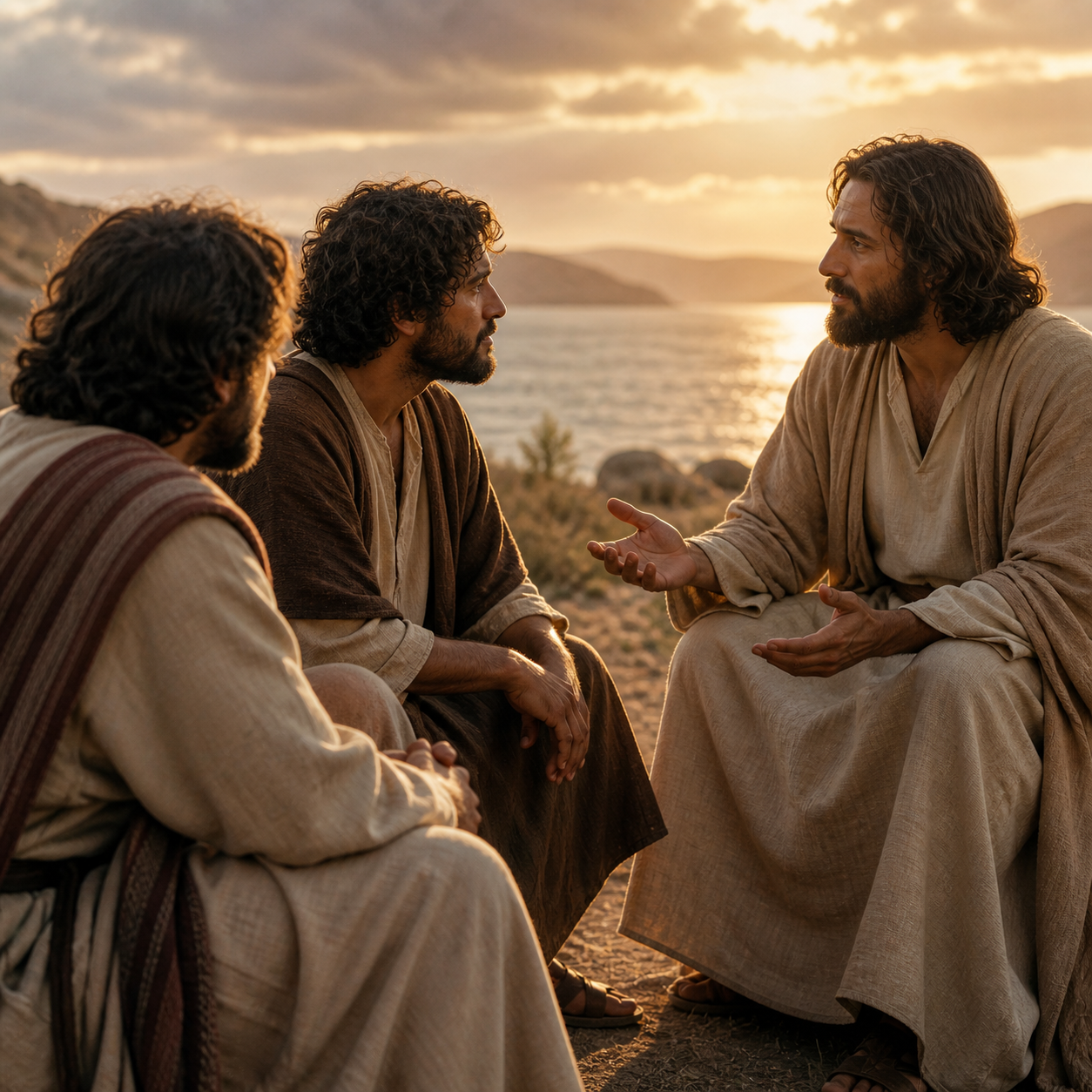
Mark 10:35-45
There’s an old story about Winston Churchill as a young boy that says his teachers often found him frustrating to deal with. He was stubborn, outspoken, impulsive, emotional, and not particularly disciplined in the classroom. In fact, many people who knew him early in life saw him as difficult more than promising. He talked too much. Challenged authority too often. Had strong opinions about nearly everything. And there were moments when those rough edges made him seem like someone unlikely to become much at all.
But history has a way of changing how we see people.
Because years later, those same traits that once frustrated teachers became the very qualities that helped steady an entire nation during one of the darkest periods in modern history. The stubbornness became resolve. The strong opinions became conviction. The emotional intensity became courage. And the boy who once seemed rough around the edges became a leader capable of helping people endure a world war.
And I think there’s something important in that for us this morning, because sometimes the very traits that seem difficult early in life are actually gifts that have not yet been fully shaped.
- A strong willed child can become a courageous adult.
- A talkative child can become a gifted communicator.
- An emotional child can become deeply compassionate.
Many of us spend our lives believing God can only use polished people. People who already seem spiritually mature and emotionally put together.
But when you look carefully through Scripture, that’s almost never who Jesus calls.
Instead, He calls real people.
- People with personalities.
- People with rough edges.
- People with strong emotions and imperfect instincts and unfinished hearts.
And perhaps no disciple shows us that more clearly than James.
Now it’s important to know that there are two men named James at this time in scripture. In this case I’m not talking about James the brother of Jesus, but James the son of Zebedee. He was one of the twelve disciples and arguably one of the inner circle closest to Christ.
He was also a man Jesus once nicknamed “Son of Thunder.” And that was not because James had a calm and gentle personality. James was passionate, intense, impulsive and strong willed; and yet Jesus called him anyway.
Not because James was already polished…
but because Jesus could already see what His grace would eventually shape him into becoming.
Jesus Calls Real People
When we first meet James in Scripture, he is not standing in a synagogue teaching theology or quietly praying in solitude somewhere along the Sea of Galilee, he is working. Matthew tells us that James and his brother John are in the boat with their father Zebedee, mending nets when Jesus walks by and calls them. There is something beautifully ordinary about that moment because James is not introduced to us as a polished religious leader but as a fisherman. A man with rough hands, who worked long days, who had a strong personality and was accustomed to storms, hard work, and speaking plainly.
And almost immediately, we begin to discover what kind of man James is.
In Mark chapter 3, Jesus gives James and John a nickname: “Boanerges,” which Scripture tells us means “Sons of Thunder.” Even the sound of the word feels loud and forceful. The phrase likely comes from Aramaic, and scholars believe it points to their fiery and passionate personalities. These were not quiet men who faded into the background. These were intense men who felt things strongly and reacted quickly.
And honestly, there is something encouraging about that, because Jesus was not surprised by James’ personality. He was not caught off guard by his intensity or frustrated by his passion and He did not look at James and say, “Come back after you calm down a little.”
He called him as he was.
I think many Christians quietly assume God only uses certain types of personalities. We sometimes imagine that truly spiritual people are always calm, reserved, composed, and gentle every moment of the day. And while gentleness absolutely matters in the Christian life, enough so that it is a fruit of the Spirit, scripture repeatedly shows us that God calls all kinds of people.
- Peter is impulsive.
- Paul is intense.
- Martha is driven.
- Thomas is skeptical.
- John is emotional.
- And James is thunderous.
The goal of discipleship was never to erase their humanity but to redeem and refine it. And that is such an important distinction because sometimes the very things we think disqualify us are actually the raw material God intends to shape for His kingdom.
God often plants gifts in us long before He fully shapes how those gifts will be used. Often the traits that create the greatest challenges early in life become the very traits that God later refines into strength.
That is exactly what Jesus sees in James but like all of us, James still needs shaping.
Because passion without maturity can become destructive.
And we see that clearly in Luke chapter 9.
“When the days drew near for him to be taken up, he set his face to go to Jerusalem. And he sent messengers ahead of him. On their way they entered a village of the Samaritans to prepare for his arrival, but they did not receive him because his face was set toward Jerusalem. When his disciples James and John saw this, they said, “Lord, do you want us to command fire to come down from heaven and consume them?” But he turned and rebuked them. Then they went on to another village.”
Luke 9:51-56 NRSVUE
That is such a “Son of Thunder” moment. James sees rejection and immediately reaches for judgment. While it sounds extreme to us, Craig Keener notes that this kind of zeal was actually admired in many Jewish circles of the time. Fierce devotion was often seen as honorable. James likely thought he was defending Jesus. Protecting His honor. Standing for righteousness.
But Jesus rebukes them.
Not because passion itself is wrong, but because their passion has not yet been shaped by mercy.
Sometimes our greatest strengths become our greatest weaknesses before God refines them.
- Leadership can become pride.
- Conviction can become harshness.
- Passion can become impatience.
- Boldness can become arrogance.
And yet here is the beautiful thing about Jesus:
He does not give up on James because Jesus does not call finished people; He forms them.
Many of us have probably experienced moments in life where someone made us feel like our strongest personality traits were problems to fix rather than gifts to shape.
Maybe you were told you were:
- Too emotional.
- Too energetic.
- Too stubborn.
- Too talkative.
- Too driven.
- Too sensitive.
- Too intense.
But what if some of those very things are actually part of how God created you to serve His kingdom?
Jesus Redefines Greatness
Once we establish that our personalities aren’t a mistake, we can then be confident that the rough edges in James were not accidental.
His passion, intensity, boldness, and strong personality were not mistakes God needed to undo. They were part of how God created him. But like all gifts, they needed direction. They needed maturity. They needed to be shaped by Christ.
Because unshaped passion can easily become self-centered ambition and that is exactly what we begin to see in James.
What makes this especially understandable is that James had already seen incredible glimpses of Jesus’ glory. He was part of the inner circle. Alongside Peter and John, James witnessed moments that most of the disciples never experienced firsthand. In Matthew 17:1-13, Jesus takes them up a mountain for what we call the Transfiguration. And there, for a brief moment, James sees Christ revealed in radiant glory. Scripture says Jesus’ face shone like the sun and His clothes became dazzling white. Moses and Elijah appear beside Him, and the voice of the Father speaks from heaven.
It is one of the most breathtaking moments in all the Gospels and James is standing there for it.
So when James later asks for places beside Jesus in glory, we should understand that he has already seen glimpses of something extraordinary. He knows there is a kingdom coming and James wants to be close to it.
It’e easy to understand why he would be so bold, most people want their life to matter. We want to know we made a difference, were useful and know our lives carried meaning and purpose. The problem is not that James desires greatness, the problem is that he misunderstands where greatness is actually found.
James still sees leadership the way the world often sees it: position, influence, visibility, recognition. And the same passion that once made him bold enough to follow Jesus is now showing up as ambition.
Jesus does not shame him for that; He knows His disciple.
Instead, Jesus redirects him. He says, “Whoever wishes to become great among you must be your servant.”
The Greek word Jesus uses is diakoneō. It means to serve others, to care for practical needs, to intentionally place yourself in service to someone else. It is where we eventually get the word “deacon.”
Here in Worcester County many people immediately recognize a similar word: Diakonia.
For years, Diakonia has quietly cared for families facing crisis by providing meals, housing assistance, support, and hope during difficult seasons of life. Most of the people serving there are not doing it for recognition or applause. In fact, many acts of service happen quietly enough that most people never fully see them.
And that is exactly the picture Jesus is giving His disciples.
Greatness in the kingdom of God is not about being above people, it is about loving people well.
And this is where James’ rough edges begin getting reshaped into something beautiful. Where:
- The same passion that once reached for recognition can now become courage in serving others.
- The same intensity that once wanted positions of honor can become deep conviction and faithfulness.
- The same strong personality that once pushed toward status can become leadership rooted in humility.
Jesus does not waste the gifts He places inside people when we go a little off course, James proves to us that He reshapes them.
And honestly, that should encourage every one of us because many of the traits we struggle with most are often strengths that have not yet been fully matured by grace.
- The driven person may eventually become dependable and faithful.
- The emotional person may become deeply compassionate.
- The outspoken person may become a powerful voice of encouragement and truth.
- The strong willed person may become courageous when others are afraid.
That does not happen overnight. Jesus shapes people over time. And slowly, James begins learning that greatness in the kingdom of God is not found in being noticed most. It is found in loving and serving others well.
Jesus Uses Shaped People to Strengthen Others
By the time we reach the book of Acts, something in James has clearly changed.
- The thunder is still there, but now it has direction.
- The passion is still there, but now it has humility.
- The boldness is still there, but now it is rooted in faithfulness rather than ambition.
And what is fascinating is that Scripture never gives us one dramatic moment where James suddenly becomes a completely different person. Instead, his transformation seems to happen slowly through years of walking closely with Jesus. Through listening. Through serving. Through watching Christ love people, forgive people, teach people, and care for people again and again.
Because that is usually how Jesus shapes us too; not instantly but gradually.
Over time, James becomes less focused on being important and more focused on being faithful.
In Acts chapter 1, after the resurrection and ascension of Jesus, the disciples gather together in the upper room to pray and wait for the coming of the Holy Spirit. And tucked quietly into the list of names is James. He’s still there waiting, faithful and following.
There is something powerful about that kind of consistency because by this point, James has experienced moments that could have shaken anyone. He has seen miracles and misunderstandings. He has seen the glory of Christ revealed on the mountain during the Transfiguration, and he has also seen Jesus arrested and crucified. He has had moments where Jesus corrected him, challenged him, and completely reshaped the way he understood greatness and leadership.
And yet he stays which shows us that some of the most important people in our lives are people who simply keep showing up faithfully.
Not flashy people.
Not always the loudest people.
Not necessarily the people everyone notices first.
Just faithful people who encourage others consistently, quietly serve without needing recognition and who remain steady through changing seasons of life. People whose presence strengthens everyone around them.
Because the kingdom of God is often built through ordinary acts of steady obedience.
- A teacher who patiently invests in children year after year.
- A volunteer who serves faithfully behind the scenes.
- A friend who continues checking in when life gets difficult.
- A person who quietly prays for others every single day.
These things may not seem dramatic in the moment but in the kingdom of God, faithfulness matters deeply.
And perhaps that is one of the most beautiful parts of spiritual growth. Jesus does not just shape us for our own sake; He shapes us so we can strengthen others.
And slowly, over time, the rough edges that once felt unsteady begin becoming places where grace is visible.
Not because our personality disappears.
But because Christ begins shining through it.
Conclusion: Jesus Sees More in Us Than We See in Ourselves
When you step back and look at the life of James, what becomes so remarkable is not that he started out polished.
It is that Jesus saw beyond who James was in the moment and into who he could become through grace.
Because when Jesus first called James, He was calling a man with rough edges.
- A passionate man.
- An impulsive man.
- A strong willed man.
- A man who sometimes spoke too quickly and reacted too strongly.
- A man who did not yet fully understand what greatness looked like.
And yet Jesus called him anyway.
Not because James was already finished, but because Jesus was not finished with him.
This is one of the most inspiring messages of hope in all of Scripture. There are many people who quietly assume God can only use polished people. Those people who appear to be spiritually mature and who already seem to have everything together.
But the disciples remind us again and again that Jesus has always called ordinary people with unfinished hearts.
- Peter was impulsive.
- Thomas wrestled with doubt.
- Martha could become overwhelmed.
- And James was a Son of Thunder.
But Jesus saw beyond the rough edges, He saw what grace could shape them into becoming.
And maybe that is what some people need to hear this morning.
So if somewhere along the way, someone convinced you that the strongest parts of your personality were problems to fix instead of gifts to shape I ask that you consider that maybe those are actually part of how God created you to serve His kingdom?
What if the rough edges are not evidence that God cannot use you…
…but evidence that He is still shaping you?
Comments are closed