Matthew 28:1–10
Sometimes there is something strange about our attitude towards prayer when you stop and think about it. We pray because we believe God hears us. We ask God to move, to provide, to open doors, to change circumstances, to give us direction, and sometimes to do things we cannot possibly accomplish ourselves. Yet when God actually does the thing we have been asking Him to do we somehow we are still surprised.
Maybe that says something about the difference between faith and expectation. We can genuinely believe in God while quietly deciding what we think God is likely to do. We can trust Him while still keeping our expectations safely within the boundaries of what seems reasonable. Sometimes our faith is real, but our expectations of God are too small.
For the last several months, we have been walking through Matthew’s Gospel together, watching ordinary people encounter Jesus and trying to understand what happens when their lives cross paths with His. Now Matthew brings us to one final encounter. Two women are walking toward a tomb where they watched the body of Jesus being placed, and they have absolutely no idea what is waiting for them.
They came looking for Jesus bit before this morning is over, Jesus is going to find them.
And the question Matthew leaves us with is the same question we need to wrestle with ourselves: What do you do when Jesus actually shows up?
They Came Looking for Jesus, and Jesus Found Them
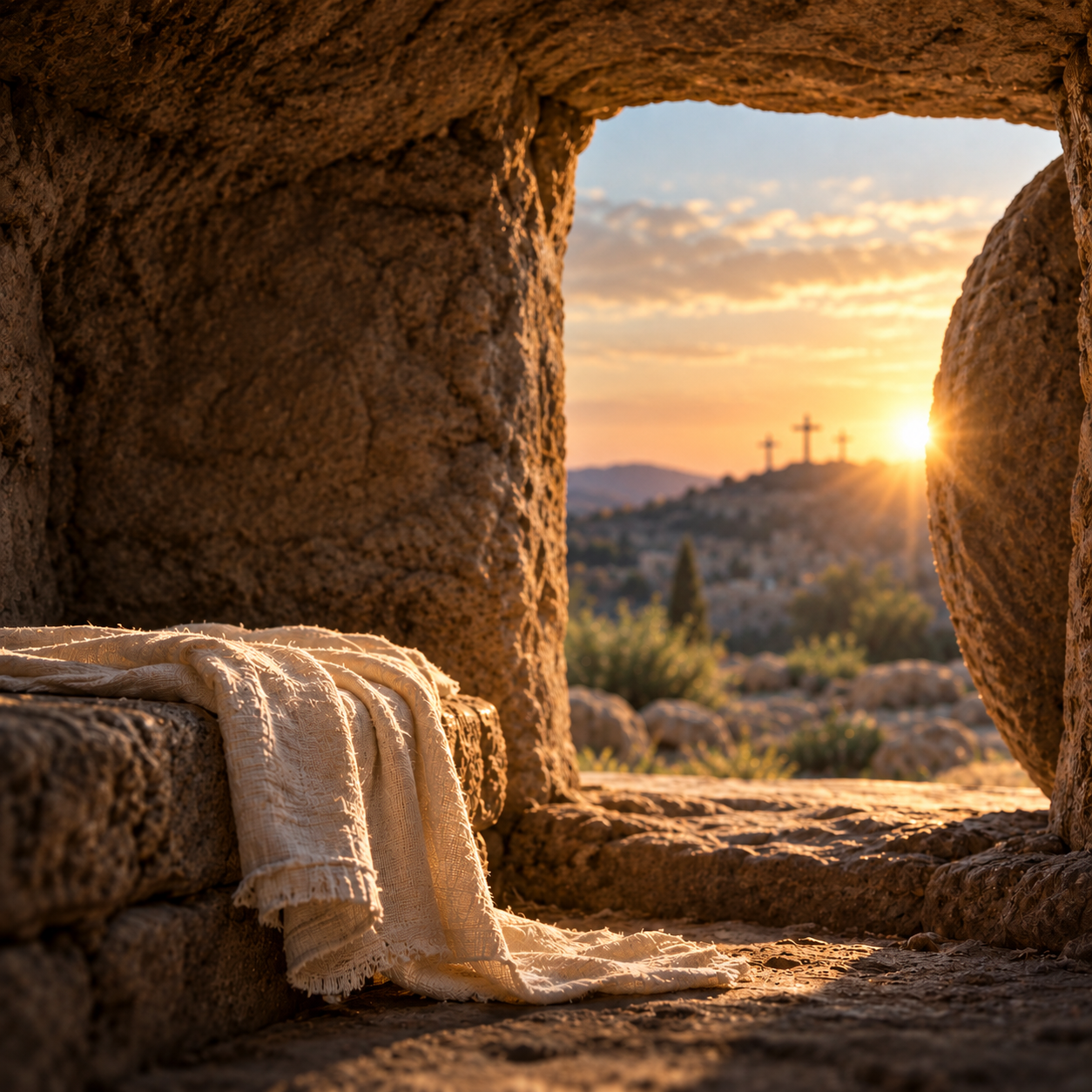
28 After the Sabbath, as the first day of the week was dawning, Mary Magdalene and the other Mary went to see the tomb. 2 And suddenly there was a great earthquake, for an angel of the Lord, descending from heaven, came and rolled back the stone and sat on it. 3 His appearance was like lightning and his clothing white as snow. 4 For fear of him the guards shook and became like dead men. 5 But the angel said to the women, “Do not be afraid, for I know that you are looking for Jesus who was crucified. 6 He is not here, for he has been raised, as he said. Come, see the place where he[a] lay. 7 Then go quickly and tell his disciples, ‘He has been raised from the dead,[b] and indeed he is going ahead of you to Galilee; there you will see him.’ This is my message for you.” 8 So they left the tomb quickly with fear and great joy and ran to tell his disciples.
Matthew 28:1–8
Matthew tells us that after the Sabbath, as the first day of the week was beginning to dawn, Mary Magdalene and the other Mary went to see the tomb. These are not women who have suddenly appeared at the end of the story. Matthew has made sure we know they were there when Jesus died, watching from a distance as He hung on the cross. They were there when Joseph of Arimathea placed His body in the tomb, sitting opposite the grave as the stone was rolled into place. And now, when the Sabbath has ended and morning begins to break, they are there again. When so many others have disappeared, these two women keep showing up.
There is something deeply faithful about that. Matthew does not tell us they went there expecting a resurrection. He simply says they went to see the tomb. They know where Jesus is because they watched Him being buried there, and as far as they know, nothing has changed since they left. Jesus had told His disciples that He would be killed and raised on the third day, but there is no indication that these women are walking toward the tomb wondering whether this might be the morning He gets up. They are faithful enough to show up, but they are still expecting to find a grave.
And before they can even get there, God has already done something far beyond anything they were expecting. The ground shakes, an angel of the Lord descends from heaven, the stone is rolled away, and the guards who were supposed to make sure nothing happened become so terrified that Matthew says they were “like dead men.” The irony is almost impossible to miss. The men guarding the tomb look dead, while the man who had been inside the tomb is alive.
The angel knows why the women have come. “Do not be afraid,” he tells them, “I know that you are looking for Jesus who was crucified. He is not here; for he has been raised, as he said.” Those last three words matter: as he said. Jesus had told them this was coming. God has not suddenly changed the plan. The resurrection is not God improvising after the cross went terribly wrong. Jesus had been telling His followers where this road was leading, but what He promised was so far beyond what they could imagine that even those who loved Him struggled to expect it.
That is where these women begin to look a lot like us. We can know what God has said and still arrive at the tomb expecting the stone to be exactly where we left it. We can pray for God to move while already preparing ourselves for nothing to change. We can ask God to open a door while assuming it will probably remain closed, or ask Him to use us while quietly believing we do not have much to offer. That does not necessarily mean our faith is false. The faithfulness of these women is difficult to question. Sometimes our faith is real, but our expectations of God are too small.
The angel invites them to look for themselves. “Come, see the place where he lay.” Then he immediately gives them somewhere else to go: “Go quickly and tell his disciples, ‘He has been raised from the dead.’” Matthew says they leave quickly with “fear and great joy,” which may be one of the most truthful descriptions of encountering God anywhere in Scripture. They do not suddenly understand everything. Fear and joy are traveling together as they run away from that empty tomb, carrying news they are still trying to comprehend themselves.
But they have not yet experienced the greatest surprise of the morning. They came looking for Jesus in the place where they had last seen Him, and they have now been told that He is alive. They are running to tell the others what the angel has said when Matthew gives us two wonderful words: “Suddenly Jesus.” Before they ever reach the disciples, before they have time to sort through everything they have just experienced, the risen Christ meets them on the road.
They came looking for Jesus.
And Jesus found them.
They Took Hold of His Feet and Worshiped Him
9 Suddenly Jesus met them and said, “Greetings!” And they came to him, took hold of his feet, and worshiped him.
Matthew 28:9
Matthew says, “Suddenly Jesus met them and said, ‘Greetings!’ And they came to him, took hold of his feet, and worshiped him.” After everything these women have experienced that morning, Matthew gives us no record of them asking a question. They do not ask Jesus how this happened or where He has been. They do not ask Him to explain the empty tomb or the angel or the earthquake. When Jesus actually shows up, they fall at His feet and worship Him.
There is something beautifully physical about the way Matthew describes this moment. They take hold of His feet. These are the same women who watched Jesus die and saw where His body was laid, and now they are touching Him. Matthew does not leave us with a vague spiritual experience or the possibility that grief has caused them to imagine something. The Jesus standing before them has feet they can hold. The One who was crucified is the One who is standing there. The resurrection is not the survival of an idea or the continuation of Jesus’ influence after His death. Jesus is alive.
Their response also brings us back almost to where Matthew began. Near the beginning of this Gospel, strangers from the East came to Jerusalem looking for the child who had been born king of the Jews because they said, “We have come to worship him.” Now, near the end of Matthew’s Gospel, these women are at the feet of the risen King doing exactly that. Matthew has framed the story of Jesus with worship. The Magi came looking for Jesus and worshiped Him when they found Him; the women came looking for Jesus and worshiped Him when He found them. After everything we have seen Jesus say and do throughout this Gospel, Matthew brings us back to the response that has been there from the beginning. When you finally recognize who is standing in front of you, worship is the only response that makes sense.
But there is another resurrection encounter that helps us understand what happens next. John tells us about Mary Magdalene encountering Jesus outside the tomb, and in that account Jesus tells her, “Do not hold on to me.” At first that can sound strange beside Matthew, because Matthew specifically tells us that the women took hold of His feet. Yet together these accounts show us something important about encountering the risen Christ. Jesus allows Himself to be held, but He will not allow Mary to remain there clinging to Him as though resurrection means simply getting back the Jesus she thought she had lost.
Resurrection is not a return to the way things used to be. Mary cannot hold Jesus there and preserve this moment for herself. Something new has begun, and the risen Christ has somewhere for her to go. The same is true for the two women in Matthew. They can take hold of His feet. They can worship Him. They can experience the overwhelming joy of discovering that the One they watched die is standing alive before them. But they cannot build their lives around remaining on that road at His feet.
There is something here for the church as well. We gather because we want to encounter Christ. We pray for His presence, sing His praises, open His Word, and come to His Table because worship places us again and again before the One who is alive. There are moments when we need nothing more than to remain at His feet, especially when life has exhausted us and we need to remember who He is. But Jesus never intended worship to become a place where we hold onto Him for ourselves and refuse to move.
The women came looking for Jesus, and Jesus found them. When He showed up, they took hold of His feet and worshiped Him. But eventually they had to let go, because the same Jesus who receives their worship is about to give them a mission.
They cannot stay at His feet forever.
Jesus is about to tell them to go.
Jesus Sent Them to Tell
10 Then Jesus said to them, “Do not be afraid; go and tell my brothers and sisters to go to Galilee; there they will see me.”
Matthew 28:10
The women have barely taken hold of Jesus before He gives them somewhere to go. “Do not be afraid,” He tells them. “Go and tell my brothers to go to Galilee; there they will see me.” The movement happens almost immediately. They have encountered the risen Christ, they have fallen at His feet in worship, and now Jesus sends them away from that moment carrying a message for somebody else. Their worship becomes witness.
There is something remarkable about the fact that Jesus entrusts this message to these two women. In the world in which they lived, the testimony of women did not carry the same social and legal standing as the testimony of men in many settings, yet Jesus chooses Mary Magdalene and the other Mary to carry the news upon which everything has changed. The first people sent by the risen Christ are not the disciples who had walked with Him for years, not Peter, not John, not one of the Twelve. Jesus entrusts the message to two women who had simply remained near Him through the darkest parts of the story. They stayed near the cross. They watched the burial. They came back to the tomb. And when Jesus showed up, He gave them something to tell.
But what Jesus tells them to say may be just as remarkable as whom He chooses to say it. He does not tell them, “Go tell my disciples.” He says, “Go and tell my brothers.” We have walked through enough of Matthew together to know what those brothers had done. When Jesus was arrested, His disciples deserted Him and fled. Peter had insisted that even if everyone else abandoned Jesus, he never would, and before the night was over he had denied three times that he even knew Him. When the women were watching Jesus die, most of these men were nowhere to be found.
They failed spectacularly, yet the risen Jesus does not say, “Go tell those cowards who deserted me.”
He calls them my brothers.
Before Peter can apologize, before any of them can explain why they ran, before they have done anything to repair what they broke, Jesus speaks of them as family. The resurrection has not erased what happened on Thursday night, but their failure no longer gets to define their relationship with Jesus. The first message they receive from the risen Christ carries within it the grace they desperately need. Jesus is alive, and somehow the people who abandoned Him still belong to Him.
That matters because most of us know what it is to wish we could go back and change something. We know what it is to remember the moment when we should have spoken and remained silent, when we should have stayed and walked away, when we knew what faithfulness required and chose something easier. Sometimes we carry those failures so long that we begin to assume Jesus must see us primarily through them. Yet the first words He sends toward disciples who failed Him are words of relationship. He knows exactly what they did, and He still calls them His own.
And these women get to carry that message. They are not sent because they have all the answers to what happened at the tomb. They have only just begun to understand it themselves. They are sent because they encountered Jesus. That is the pattern Matthew leaves us with. Encounter leads to worship, and worship leads to witness. We do not have to understand everything about God before we can tell someone what we have experienced of His grace. We simply tell what we know: we came looking for Jesus, Jesus met us, and what we discovered in Him changed us.
A few verses later, Matthew will widen this commission beyond these two women. The disciples will meet Jesus in Galilee, they will worship Him, and Jesus will send them to make disciples of all nations. The Gospel that began with people from the nations coming to worship Jesus ends with worshipers being sent back toward the nations. Matthew has brought the story full circle, but he does not really allow it to end. The people who encounter Jesus become the people through whom others encounter Him.
That is why we cannot remain at His feet forever. We worship the risen Christ, but eventually He turns us toward the people who need to know what we have discovered there. Somewhere beyond these walls is someone who believes their failure has disqualified them, someone who assumes Jesus wants nothing more to do with them, someone who has no idea that grace is already moving in their direction.
The women arrived at the tomb looking for Jesus. Jesus found them, they fell at His feet and worshiped Him, and then He sent them out carrying grace to people who desperately needed to hear it.
And two thousand years later, He is still sending people who have encountered Him to tell somebody else.
Conclusion
For the last several months, Matthew has allowed us to walk alongside people whose lives were interrupted by Jesus. We have watched people leave boats and tax booths to follow Him, listened as He taught crowds and confronted religious leaders, watched people bring their sick and broken to Him, and seen disciples struggle again and again to understand who was standing in front of them. Through all of those encounters, Matthew has slowly been answering the question he has been asking from the beginning: Who is this Jesus?
Now two women come to a tomb believing they already know how the story ends. Their faith is real. Their love for Jesus is undeniable. They have remained near Him when so many others disappeared, yet even they are not prepared for what God has done. Sometimes our faith is real, but our expectations of God are too small. They came looking for Jesus among the dead, and the living Christ found them on the road. When He showed up, they worshiped Him, and then almost immediately He sent them to tell somebody else.
I have been thinking about that this week because Krystal Turner recently came up with a wonderfully simple idea for our church. Instead of giving people another card that says, “You should come to church sometime,” what if we made the invitation personal? What if the invitation simply said, “Come Sit With Me”? There is something different about that. You are not asking someone to walk through unfamiliar doors by themselves, find a seat by themselves, and wonder whether they belong. You are saying, “Come with me. There is a place beside me, and you will not have to do this alone.”
Maybe that is one way we can live out what happens at the end of Matthew. We have spent months encountering Jesus through this Gospel, but we cannot simply remain at His feet enjoying what we have discovered for ourselves. Eventually Jesus says, “Go and tell.” That does not mean you need all the right words or enough answers for every question someone might ask. Maybe it begins much more simply. Think about one person in your life who could use a place beside you. Someone who has been away from church, someone who has never been comfortable walking into one, someone who is carrying more than you know, or maybe someone who simply needs an invitation. Take one of those cards and say, “Come sit with me.”
And before we leave to extend that invitation, we come to a Table where Christ has already extended one to us. None of us arrived here because we followed Jesus perfectly. We come with our faith and our questions, our obedience and our failures, and the risen Christ still calls us His own. The same Jesus who called the disciples who abandoned Him “my brothers” makes room for imperfect people like us at His Table.
So perhaps this is the right place to end our journey through Matthew. We came looking for Jesus, and again and again He has found us. We have worshiped Him together, and now He will send us back into the world to tell somebody else. But first, we come to His Table, not to the table of a Savior who remained in the tomb, but to the Table of the risen Christ, where once again He meets us with grace and says, “Come, there is a place for you here.”
Comments are closed